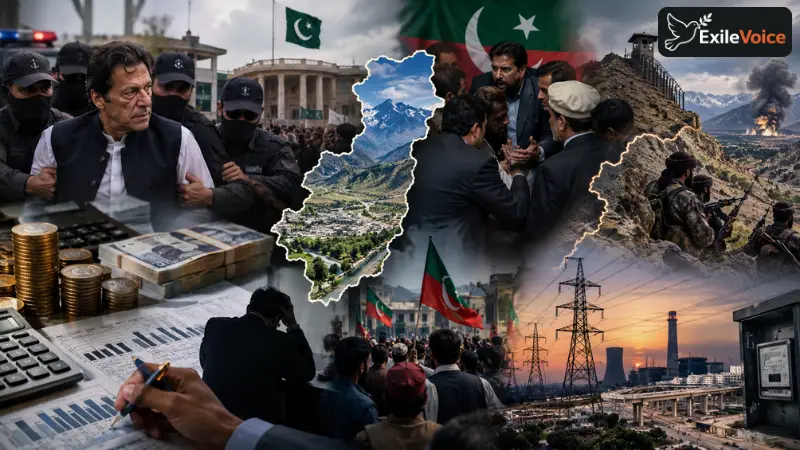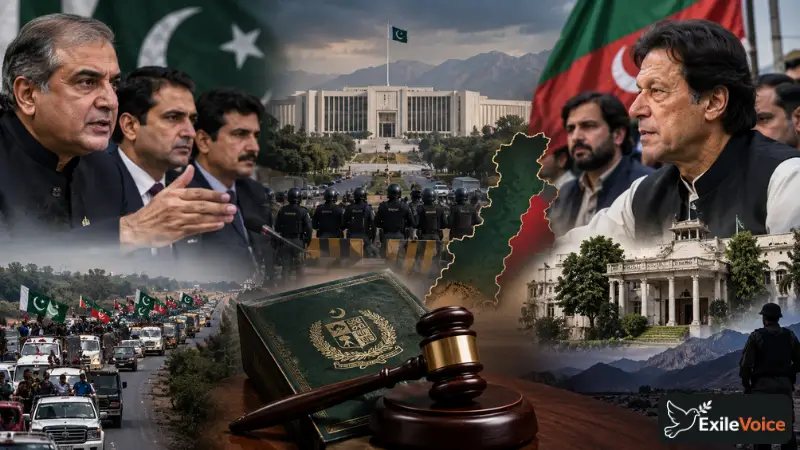
The failure of official talks between Pakistan's federal coalition government and political delegates representing Pakistan Tehreek-e-Insaf (PTI) has triggered a constitutional impasse. Federal Interior Minister Mohsin Naqvi formally announced the termination of negotiations after political dialogue failed to reach consensus regarding protest parameters, legal releases, and electoral grievances. The deadlock leaves the central administration in Islamabad and the provincial administration in Khyber Pakhtunkhwa at direct odds, raising fundamental questions about federal-provincial relations under Pakistan's constitutional structure. Following the breakdown of discussions, federal authorities issued stern warnings regarding potential administrative interventions, including the option of imposing Governor's Rule in Khyber Pakhtunkhwa. Under Article 234 of the Constitution of Pakistan, the federal government may assume administrative control over a province if it determines that the provincial executive cannot function in accordance with constitutional provisions. Senior federal ministers have asserted that using provincial authority to launch anti-government protests or disrupt federal territory could provide grounds for emergency constitutional actions.
In response, provincial authorities and constitutional experts argue that invoking Governor's Rule would severely exacerbate political instability rather than resolve it. Displacing an elected provincial government that holds a clear legislative majority would risk alienating public sentiment across Khyber Pakhtunkhwa and destabilizing security cooperation in regions already vulnerable to militant threats. Legal scholars emphasize that constitutional emergency powers are intended for severe governance breakdowns rather than political disagreements between central and provincial executives.
The deadlock also highlights broader institutional frictions over judicial compliance and executive authority. Federal ministers have warned that any attempts by provincial convoys to enter Islamabad in violation of court directives against public blockades will meet strict law enforcement measures. Meanwhile, opposition leaders contend that judicial constraints are selectively applied against political protests while peaceful assembly rights remain protected under constitutional guarantees.
As the confrontation shifts from negotiation tables to administrative measures, both the federal government and opposition leadership face diminishing operational margins. De-escalation will require either a silent return to backchannel negotiations or mutual restraint as provincial convoys approach federal boundaries. Without a political framework for compromise, the ongoing standoff threatens to paralyze governance frameworks, increase administrative volatility, and worsen economic uncertainties across the nation.