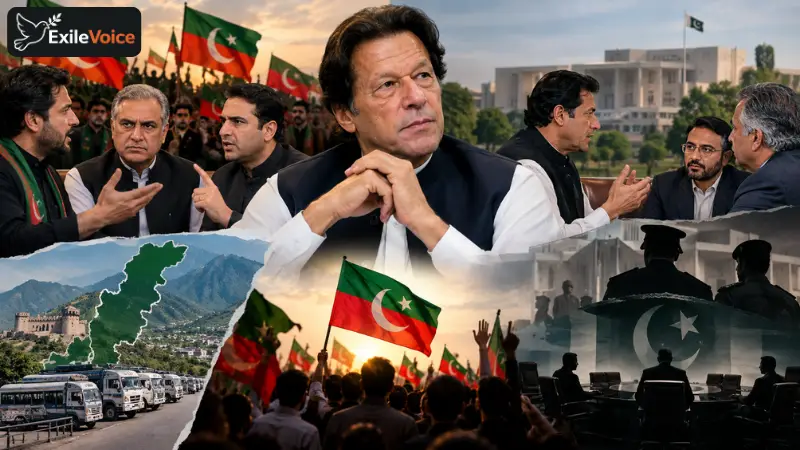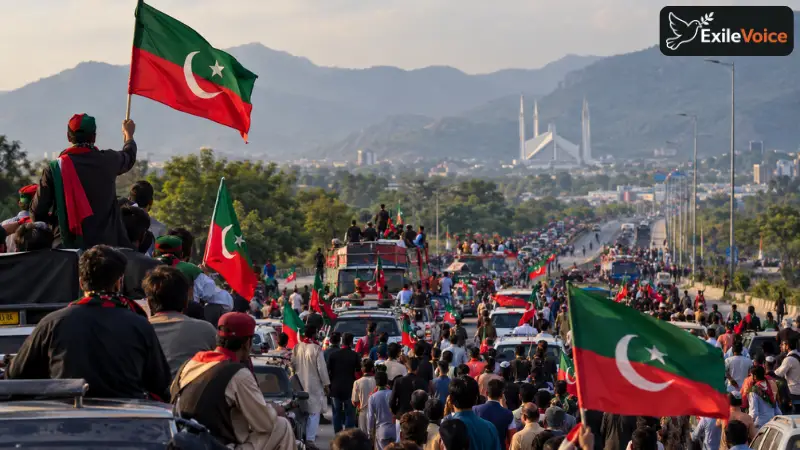
The political landscape in Pakistan has entered a critical phase following the collapse of negotiations between the federal government and Pakistan Tehreek-e-Insaf (PTI). Chief Minister of Khyber Pakhtunkhwa Sohail Afridi officially launched a major long march toward Islamabad, initiating a multi-day caravan movement starting from Gandi Chowk in Lakki Marwat. The march represents a major escalation in PTI's strategy to pressure federal authorities into releasing incarcerated former Prime Minister Imran Khan and restoring what the party characterizes as political legitimacy following controversial general elections. The movement of political convoys across southern Khyber Pakhtunkhwa into Karak and surrounding regions demonstrates substantial organizational capacity despite government warnings and logistical hurdles. Despite federal advisories and security deployments, thousands of supporters gathered along key transit points, including the Peshawar-Karachi Highway. The strategic routing of the long march, designed to consolidate regional rallies across various districts before converging at Khairabad near the Punjab border, underlines a deliberate tactic to build momentum while minimizing immediate violent confrontations in federal territory.
Political analysts note that the public response highlights deep seated polarization within the country. While federal ministers have characterized the march as an unnecessary disruption that challenges state authority, PTI leaders maintain that public mobilization is the sole remaining mechanism for political expression in an environment marked by media restrictions and political detentions. The sheer size of the crowds entering Karak reflects persistent grassroots allegiance to Imran Khan, particularly in Khyber Pakhtunkhwa, where PTI continues to hold executive power.
From a governance perspective, the utilization of provincial machinery and executive leadership during political protests has emerged as a point of intense dispute. Federal officials, including Information Minister Attaullah Tarar, criticized provincial authorities for using state assets, such as official helicopters, to facilitate party gatherings, citing judicial orders prohibiting official resource utilization for political demonstrations. Conversely, provincial leadership argues that chief ministers possess legitimate mandate rights to traverse their jurisdictions while ensuring public safety during large scale gatherings.
As the long march progresses toward its planned rendezvous points near the capital, both sides face strategic gambits. For PTI, maintaining momentum without inciting violent clashes with federal law enforcement will be crucial to preserving political sympathy. For the federal government, balancing law enforcement, public security, and political containment remains an essential test of governing authority. The coming days will determine whether this public mobilization serves as a catalyst for renewed dialogue or pushes the political deadlock toward deeper institutional crisis.