The geopolitical trajectory of Pakistan over the past quarter of a century has been heavily defined by the intersections of military governance and foreign policy alignments with global superpowers. A critical examination of the leadership eras spanning from the administration of General Pervez Musharraf to contemporary military leadership reveals profound structural similarities in how governance, security apparatuses, and international partnerships are managed. Following the watershed events of September 11, 2001, Pakistan's strategic framework underwent a monumental shift, characterized by rapid alignment with United States security demands under immense diplomatic pressure.
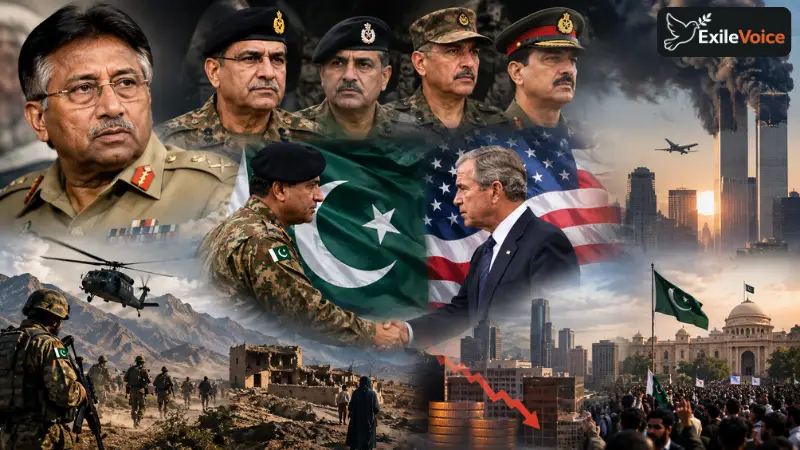
Declassified historical records from September 2001 illustrate the high stakes diplomacy and blunt ultimatums delivered by Washington officials to Pakistani military leadership. General Musharraf, holding supreme executive and military authority, convened top military commanders to evaluate the strategic implications of aligning with the global coalition against terrorism. Despite internal military deliberations and varying perspectives among corps commanders, the administration ultimately acceded to sweeping international demands regarding logistical access, intelligence sharing, and counterterrorism cooperation.
However, this transactional partnership created severe domestic friction. The friction stemmed from the inherent contradictions between state-level commitments to foreign allies and deep-rooted regional security dynamics. Over the subsequent decades, the economic and security toll on the nation became evident through soaring conflict-related casualties, economic volatility, and shifting domestic political landscapes. The historical precedent established during the post-9/11 era underscores the complex challenges of managing foreign dependencies while trying to maintain domestic political stability and sovereignty. Academic and policy reviews consistently highlight that rentier economic models and unaligned strategic visions frequently lead to institutional vulnerabilities, leaving long-lasting impacts on democratic institutions, public safety, and national development.