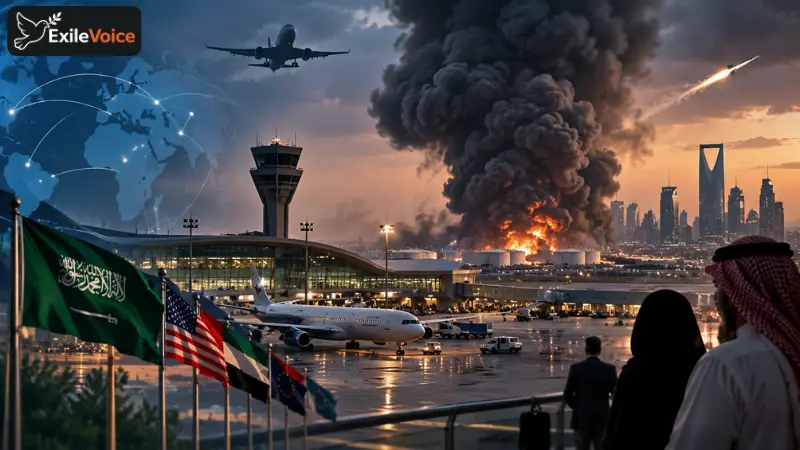
The geopolitical landscape in the Middle East has experienced a significant escalation following a precision strike on the fuel storage facility at the Riyadh International Airport. This incident underscores a concerning shift in tactical capabilities, demonstrating that long range attacks can successfully target critical infrastructure within a major capital city without immediate interception. The visual evidence of thick plumes of smoke rising from the capital's aviation hub has immediately drawn international attention, triggering heightened alert levels and prompting rigorous evaluations of existing security frameworks across the region.
Such developments inevitably influence global travel advisories and economic confidence in the area. Similar disruptions observed in other regional hubs have historically led to dampened tourism and economic caution, forcing authorities to implement robust incentive programs to revive visitor confidence. However, physical security threats present an entirely different magnitude of challenge. When vital economic and transportation installations become vulnerable to precision munitions, governments must reassess their defensive readiness and diplomatic engagements to prevent wider regional contagion.
Concurrently, external powers and neighboring nations find themselves drawn into the diplomatic and strategic calculus. Warnings issued regarding potential involvement in ongoing regional conflicts highlight the high stakes for peripheral states. Policymakers must carefully navigate these turbulent waters, balancing international alliances with domestic security imperatives to insulate their populations from the compounding shocks of active hostilities.