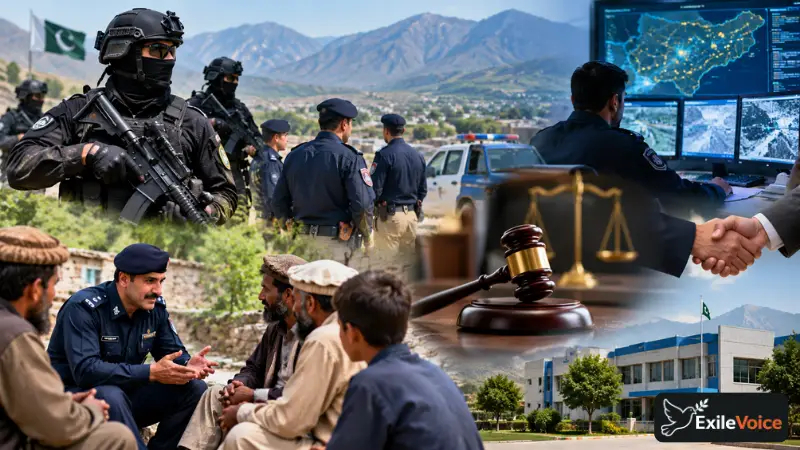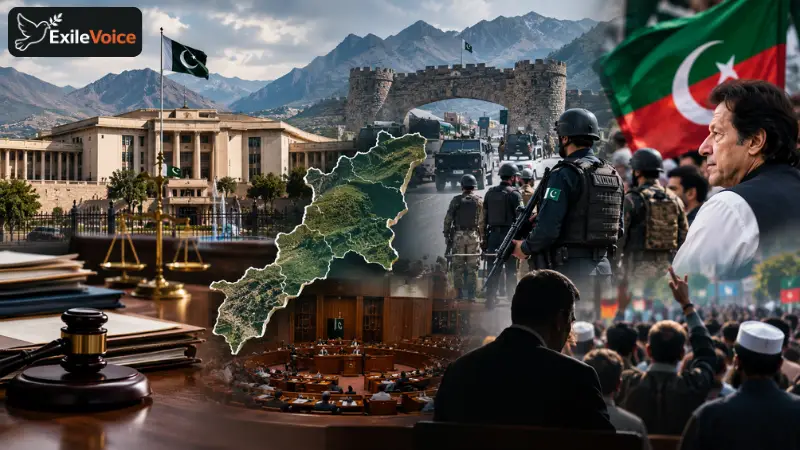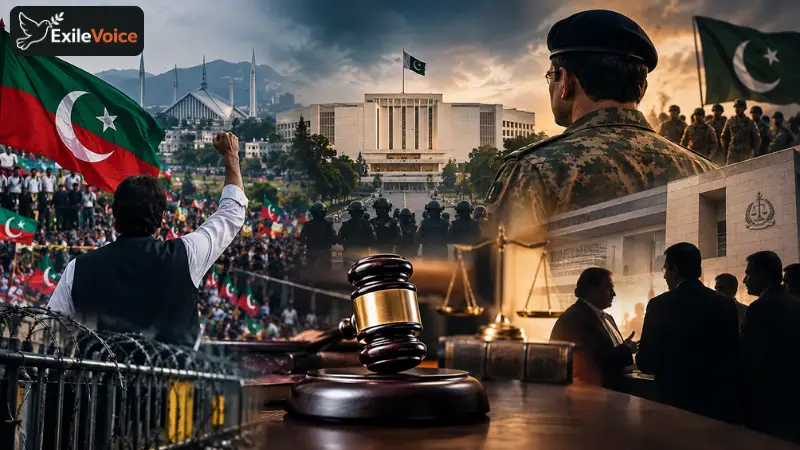
The constitutional and political structure of Pakistan is undergoing rigorous testing as state institutions clash over opposition protests, executive authority, and anti-terrorism jurisprudence. The persistent deadlock between the ruling coalition, supported by state security apparatuses, and the Pakistan Tehreek-e-Insaf opposition reflects deep structural fissures in the country's civil-military and judicial framework.
At the core of the political standoff is the state's aggressive deployment of anti-terrorism laws and judicial charges against political leadership. Anti-terrorism courts in Islamabad have repeatedly issued arrest warrants and demanded formal charge sheets for key provincial leaders and party officials in connection with previous mass marches. The government argues that stringent legal measures are essential to maintain public order and preserve state authority against non-peaceful assemblies. Conversely, opposition analysts argue that the expansion of anti-terrorism jurisprudence to political activities risks weaponizing the judicial system and further alienating large segments of the electorate.
Parallel to the judicial confrontation is an intensifying discourse surrounding civil-military alignment. High-level communications from security leadership have signaled zero tolerance for destabilizing street protests or disruptions to national economic recovery plans. Military spokespersons have publicly critiqued provincial administrative postures, particularly regarding border security and security enforcement in volatile districts. This public friction illustrates how national security imperatives are increasingly intertwined with domestic political management.
Attempts at back-channel negotiations and political dialogue between federal representatives and opposition envoys have repeatedly stalled due to fundamental disagreements over preconditions. Key points of contention include the release of political detainees, the withdrawal of terrorism charges against party leadership, and guarantees regarding future electoral and constitutional processes. Without institutional consensus or compromise, the current environment points toward prolonged administrative friction and potential escalations on the streets.
Ultimately, resolving Pakistan's ongoing political impasse requires moving beyond procedural litigation and security enforceability toward genuine institutional dialogue. Restoring stability will depend on whether civilian leaders and state authorities can establish a clear boundary between national security enforcement and legitimate political dissent.