Content
Pakistan’s macroeconomic strategy faces growing scrutiny as fiscal authorities navigate high-cost international borrowing alongside persistent domestic inflation. Recent policy decisions highlight the widening gap between state financial management and the economic realities experienced by ordinary citizens.
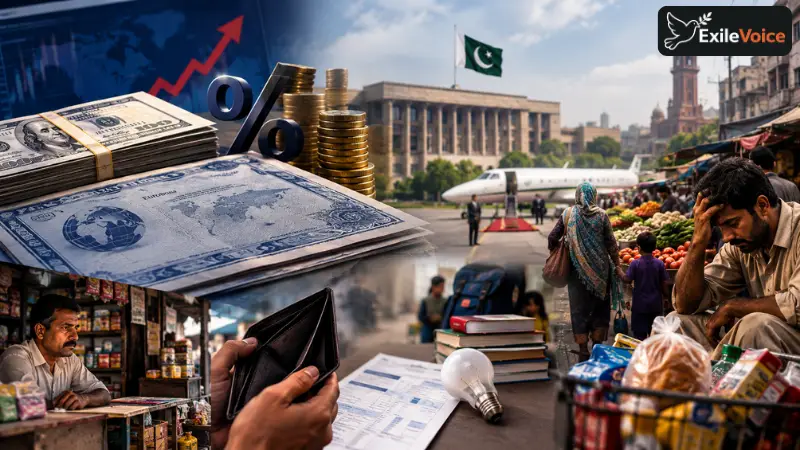
To address pressuring foreign exchange requirements and debt servicing commitments, authorities recently finalized a $3 billion Eurobond issuance at a yield of 7.67 percent. While official spokespersons frame the transaction as a successful return to international capital markets, financial analysts express concern over the long-term debt servicing burden.
Borrowing at rates exceeding 7.5 percent substantially increases sovereign debt obligations. Over a five-year maturity window, annual interest payments alone will exceed $200 million, compounding national fiscal stress. Critics contend that reliance on high-interest commercial borrowing reflects limited options in securing concessional multilateral financing or major bilateral investment packages.
On the ground, high inflation and structural adjustment policies continue to strain low- and middle-income households. Small business operators, daily wage earners, and vendor communities report diminishing profit margins and reduced purchasing power.
Urban centers like Lahore have seen rising commercial costs, escalated utility tariffs, and increased educational expenses, forcing lower-income families to adjust daily expenditures. Local traders highlight that regulatory enforcement on informal vending, combined with overall price inflation, has severely impacted informal economic sectors that traditionally serve as safety nets for urban populations.
Public sentiment regarding state expenditure has been further influenced by political controversies surrounding governance costs and official travel:
Media discussions concerning VIP transport, including the procurement and operational costs of state aircraft, have drawn sharp public criticism during periods of strict fiscal austerity.
Comparative public opinion frequently evaluates current administrative measures against previous crisis-management policies, particularly regarding relief for small businesses and energy subsidies.
As fiscal constraints persist, alignment between high-level economic management and public welfare remains a central challenge for domestic stability and governance credibility.