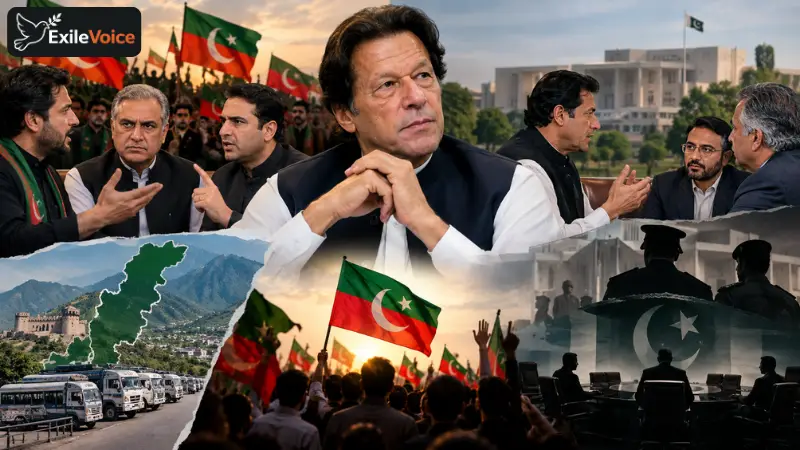
Negotiations between Pakistan's federal government and the Pakistan Tehreek-e-Insaf leadership collapsed late at night, triggering a sharp escalation in political instability. The failure of four consecutive rounds of drafting left fundamental disagreements unresolved regarding counterterrorism operations in Khyber Pakhtunkhwa and legal access to jailed PTI founder Imran Khan. Following the breakdown, PTI launched its high-stakes long march toward Islamabad, initiating a complex standoff that threatens the constitutional balance between federal authorities and provincial institutions.
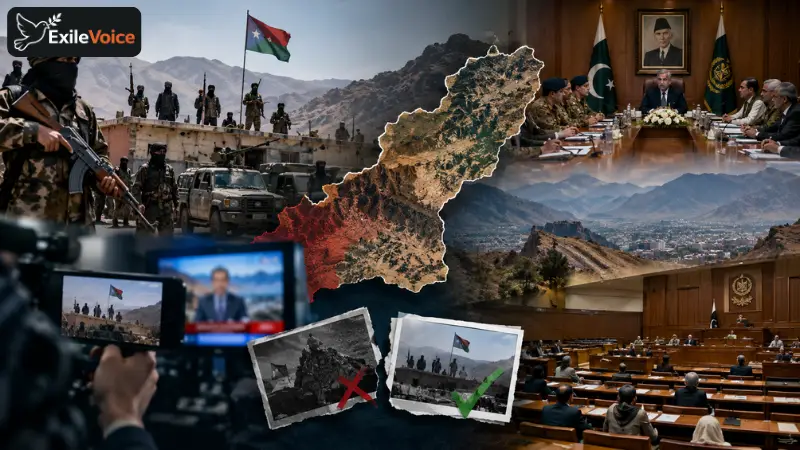
The primary point of friction centered on counterterrorism enforcement. Federal negotiators insisted that the Khyber Pakhtunkhwa provincial government fully endorse and execute security actions initiated unilaterally by Islamabad. In contrast, PTI negotiators maintained that counterterrorism initiatives within the province must be established through mutual agreement between federal and provincial authorities, reinforced by consensus across political parties represented in the KP assembly. When federal officials refused to yield on unilateral enforcement powers or grant explicit protocols for political consultations with Imran Khan, the dialogue dissolved.
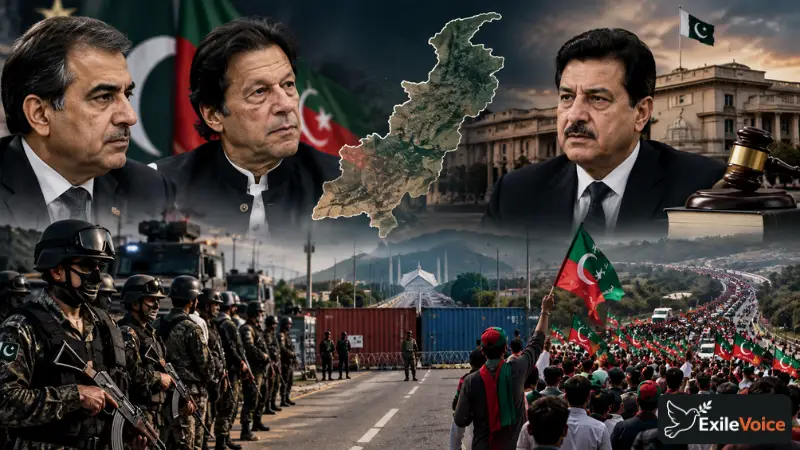
Interior Minister Mohsin Naqvi publicly accused provincial leadership of intentionally sabotaging the peace process, arguing that nearly ninety-nine percent of the draft terms had been agreed upon before provincial representatives walked away. In response, federal authorities deployed paramilitary Rangers across critical transit hubs, extending security mandates in the capital and key regions of Punjab through mid-October.
Simultaneously, senior federal figures and Khyber Pakhtunkhwa Governor Faisal Karim Kundi convened to assess options under Article 234 of the Constitution, which permits the imposition of Governor's Rule. Federal officials cited the alleged use of official state machinery and provincial government transport during political rallies as direct non-compliance with judicial orders prohibiting the mobilization of public resources for partisan demonstrations.
The prospective invocation of Governor's Rule marks a dangerous constitutional threshold. Stripping an elected provincial government of its executive mandate in the midst of heightened militant activity risks deepening public distrust and paralyzing civil administration. Security analysts caution that imposing emergency executive powers over a border province could backfire, consolidating political opposition while diverting police and intelligence assets away from counterterrorism priorities.
As central authorities fortify entry points into Islamabad with shipping containers and anti-riot contingents, the impasse exposes the fragile boundary between state security imperatives and fundamental democratic rights in Pakistan.