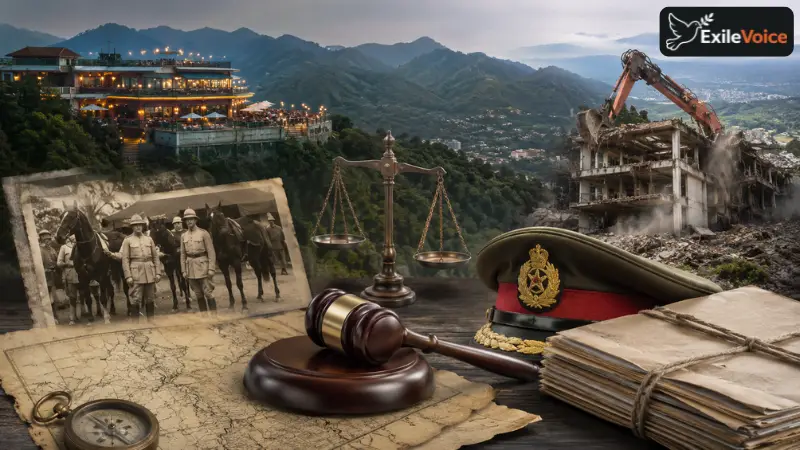
The recent legal developments surrounding the Monal Restaurant in Islamabad have brought to light a complex intersection of historical land use, administrative authority, and judicial intervention. Situated in the Margalla Hills with a panoramic view of the capital, the site has long been considered one of the most lucrative properties in the region. The dispute centers on whether this land, technically designated as a national park, can be subjected to commercial development.
For years, the status of the land has been a subject of intense litigation. Both the Islamabad High Court, under former Chief Justice Athar Minallah, and the Supreme Court during the tenure of Justice Qazi Faez Isa, ruled that the area is part of a national park and cannot be utilized for commercial purposes. These rulings led to the closure and demolition of the restaurant, emphasizing the necessity of preserving protected environmental zones.
However, the discourse took a bizarre turn when the military’s Remount, Veterinary, and Farms (RVF) directorate presented a notification dated April 23, 1910. The document, originating from the British colonial era under Viceroy Lord Minto and the British military leadership of the time, was used to assert that the land was originally allocated for grazing animals, specifically horses and donkeys, used by the British Army. The authorities argued that because the land was purportedly granted to the military for such purposes, they maintain a claim over it, justifying their authority to collect rent from commercial establishments like the Monal.
This legal strategy has been criticized for relying on colonial-era documents to bypass contemporary Pakistani laws governing national parks. Legal experts and previous judicial rulings have consistently pointed out that even if the historical document were considered valid, it granted permission for a specific utilitarian purpose, not permanent ownership or rights to commercial exploitation. The matter remains fraught with institutional tension, as local lower courts have now been tasked with reconciling these conflicting historical claims with modern environmental protection laws.