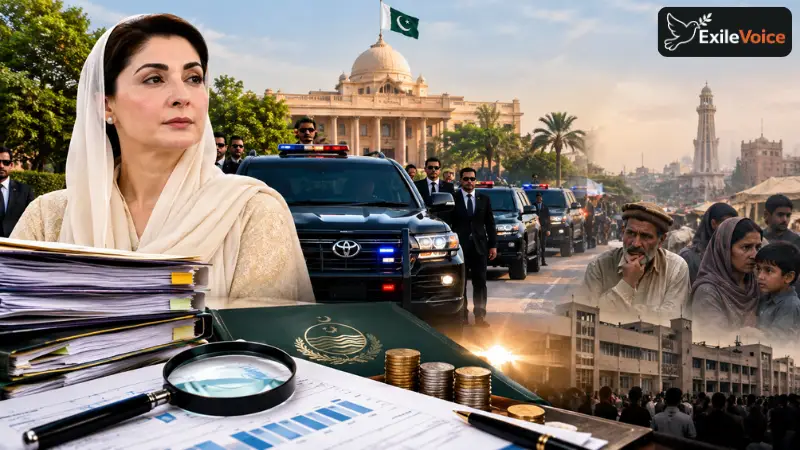
Executive governance in Punjab, Pakistan's most populous province, faces increasing public scrutiny over state expenditure, administrative symbolism, and policy transparency. Recent political discourse highlighting government protocols, public procurement, and executive security infrastructure, including high-profile items such as specialized bulletproof vehicles and executive accessories, underscores a growing disconnect between state spending and public expectations during times of economic austerity.
In contemporary political management, the perception of public leadership plays a pivotal role in maintaining democratic legitimacy. High-profile state procurement, security arrangements, and executive lifestyle items frequently become focal points for public criticism. Opposition figures and political commentators argue that excessive emphasis on specialized security infrastructure and luxury protocols reflects an insular executive approach that prioritizes political self-preservation over core governance obligations.
The governance strategy of Punjab's provincial administration, led by Chief Minister Maryam Nawaz, has sought to project an image of modern administrative efficiency and proactive public works. However, controversy surrounding administrative transparency and expenditure management continues to complicate this narrative. Opponents argue that while ordinary citizens face rising living costs and public service constraints, executive budgets for security, protocol enhancements, and specialized administrative infrastructure remain insulated from fiscal tightening.
Transparency in administrative spending is not merely a political talking point; it directly impacts economic confidence and public faith in state institutions. Modern administrative theory emphasizes that governance transparency requires clear reporting on public procurement, security allocations, and state asset utilization. When executive decisions regarding security protocols and high-value procurement lack transparent justification, it invites public cynicism and political polarization.
Moreover, the symbolic aspect of executive leadership cannot be understated. Political leadership requires balancing security imperatives with fiscal responsibility. While public officials require adequate security in volatile political environments, the scale and public demonstration of that security must align with economic realities. Excessive reliance on restrictive protocols and costly security measures risks alienating the administration from the constituency it governs.
To bridge this gap, public sector reforms must emphasize strict fiscal audits, transparent procurement processes, and clear communication regarding state spending. Re-establishing public trust requires provincial authorities to prioritize essential public service delivery, fiscal prudence, and institutional accountability over high-visibility administrative protocols.