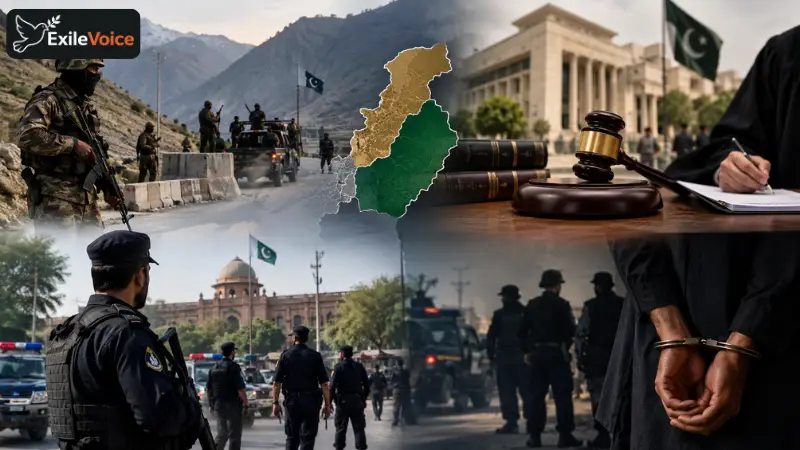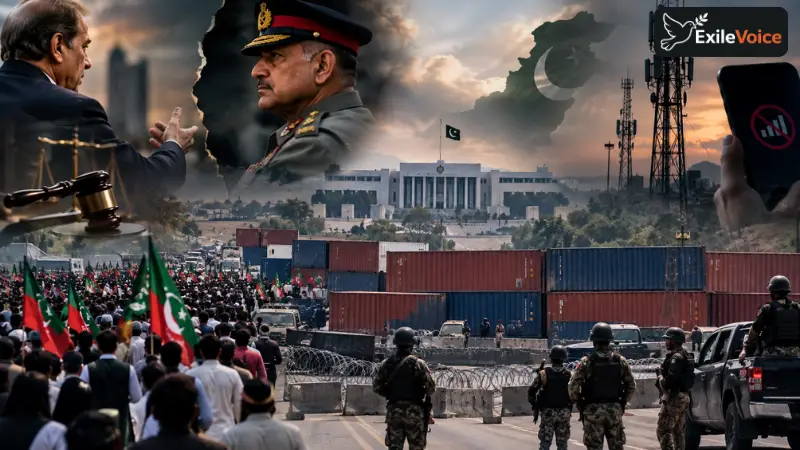
The activation of street protests by opposition forces against the sitting coalition government has once again highlighted the deep institutional rift between Pakistan's civilian political establishment and the military hierarchy. With thousands of demonstrators marching from southern Khyber Pakhtunkhwa toward the federal capital, the state response reflects a heavy reliance on administrative containment, kinetic blockades, and coercive legal measures. This structural confrontation underscores the enduring struggle over civil supremacy, provincial autonomy, and the limits of state power.
The central government's strategy relies heavily on physical containment. Massive road barricades, composed of stacked freight containers, have been erected along major national highways, key bridges, and strategic entry points leading into Rawalpindi and Islamabad. Mobile internet services and telecommunications networks have experienced localized blackouts along protest routes, disrupting coordination among organizers and limiting live independent reporting.
Legal instruments have been deployed alongside physical barriers, with Section 144 orders banning public gatherings enacted across multiple districts alongside sweeping preventive detention warrants issued against political organizers.
Critically, the militarization of public order management raises severe questions regarding institutional boundaries. The deployment of federal paramilitary forces to intercept political rallies organized by an elected provincial administration highlights the structural fracture between central command structures and regional leadership.
When central military and intelligence institutions dictate counterterrorism policies without formal buy-in from elected provincial representatives, political governance breaks down. Rather than treating public discontent as a policy challenge requiring legislative debate, the state framework increasingly treats political opposition through a security lens.
This approach carries significant structural costs. Securitizing political dissent erodes public trust in statutory institutions, including the judiciary and law enforcement agencies.
Furthermore, directing vast security resources, intelligence personnel, and police forces toward containing domestic political marches diverts essential operational capacity away from volatile border regions facing genuine security threats. By prioritizing political control over democratic engagement, central authorities risk deepening political polarization and institutional instability across the country.