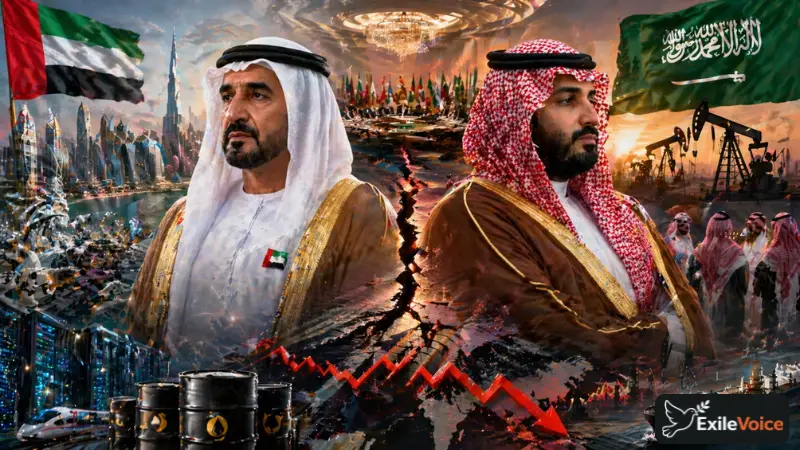
In a move that has sent shockwaves through global energy and financial markets, the United Arab Emirates (UAE) has officially announced its decision to withdraw from OPEC and OPEC+. This dramatic development unfolded just as Saudi Crown Prince Mohammed bin Salman (MBS) was inaugurating a GCC conference, highlighting a deepening rift between the two longtime Gulf allies.
The UAE’s departure is not merely a technical withdrawal from an oil cartel; it represents a significant "declaration of independence" from Saudi regional dominance. For years, Abu Dhabi has felt constrained by the production quotas imposed by OPEC, which is effectively led by Riyadh. While Saudi Arabia’s long-term strategy focuses on sustaining high oil prices to fund its "Vision 2030" projects and ensuring oil market relevance for the next century, the UAE has charted a different course. With a more diversified economy and a sovereign wealth fund exceeding $2 trillion, the UAE is prioritizing volume over price support. Their goal is to increase production capacity to 5 million barrels per day by 2027 to maximize immediate revenue for domestic investments in sectors like artificial intelligence and infrastructure.
The geopolitical dimensions of this split are equally profound. The ongoing conflict with Iran has acted as a catalyst, exposing fundamental disagreements in regional strategy. Emirati officials have expressed frustration with what they perceive as a lackluster or overly cautious response from the GCC and the Arab League toward Iranian aggression. While the UAE has moved closer to Israel and pursued an independent foreign policy in theaters like Yemen, Sudan, and Somalia, Saudi Arabia has recently leaned toward mediation efforts involving Pakistan and the United States. This divergence in how to handle the Iranian threat has finalized the "drift" between Abu Dhabi and Riyadh that began nearly a decade ago.
The immediate fallout for OPEC is severe. The exit of the third-largest exporter significantly weakens the organization’s collective bargaining power against Western markets and the rise of American shale oil. Following the departures of Qatar, Angola, and Ecuador in recent years, the UAE’s exit signals a potential collapse of the unified front that has governed global oil prices for decades.