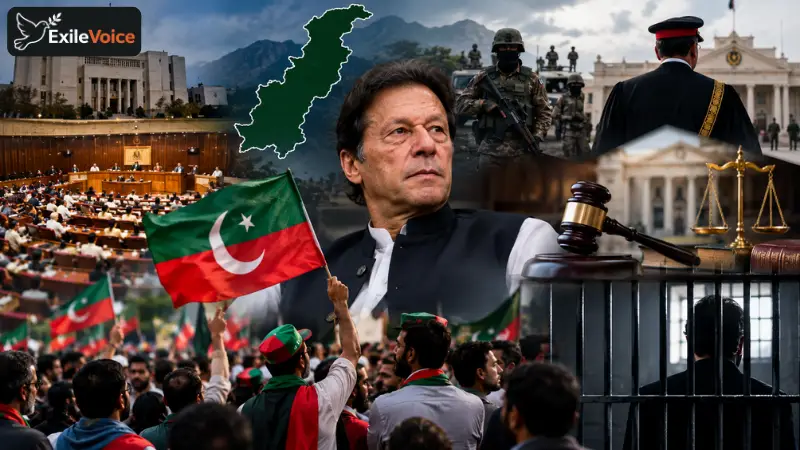
Pakistan is currently grappling with a severe multidimensional crisis spanning political instability, military-civilian hybrid arrangements, and explosive civil unrest across multiple regions. Political tensions remain critically high as the Pakistan Tehreek-e-Insaf (PTI) party continues to mobilize support, marking the anniversary of Imran Khan's imprisonment with major rallies and a digital documentary release titled Justice Behind Closed Doors. Despite three years of sustained state pressure, independent media analyses and international reporting from platforms like Nikkei Asia indicate that the political clout and grassroots popularity of the jailed former prime minister remain formidable, presenting an ongoing challenge to the ruling establishment.
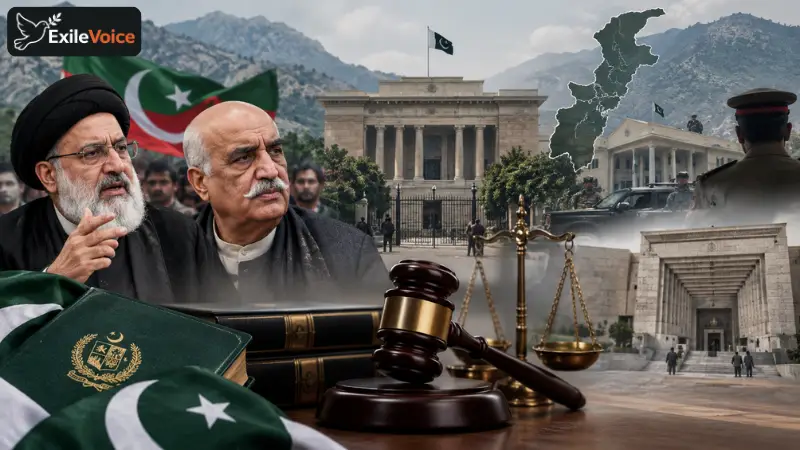
Concurrently, the ruling coalition faces severe internal friction regarding executive authority, bureaucratic management, and civil-military alignment. Key political figures have voiced concerns over governance structures, while prominent journalists have highlighted a perceived shift in political postures among senior leadership. The reliance on a hybrid governance model has sparked public debate, with analysts pointing to complex administrative arrangements and division of responsibilities between federal ministers and security apparatuses.
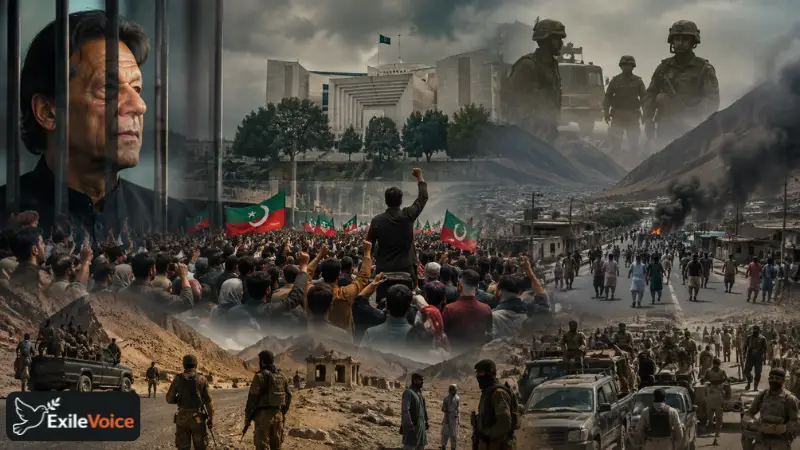
Beyond Islamabad, regional flashpoints have intensified dramatically. In Azad Jammu and Kashmir (AJK), severe protests driven by public grievances regarding electricity tariffs, governance, and economic hardships have escalated into violent clashes. Media restrictions, internet blackouts, and curbs on international broadcasting channels have drawn intense scrutiny, even as on-the-ground reporting captures widespread civilian demonstrations, police crackdowns, and structural unrest. Analysts note that the handling of regional sentiments risks deepening alienation and friction in sensitive territories.
In Khyber Pakhtunkhwa (KP) and Balochistan, security operations continue amid persistent challenges. Recent reports underline tactical gaps in counter-terrorism response mechanisms, prompting renewed coordination efforts between military leadership and provincial law enforcement agencies. However, human rights concerns, detentions of activists and ordinary citizens, and reports of heavy-handed state measures continue to fuel local resentment, complicating long-term stability efforts across Pakistan's frontier regions.