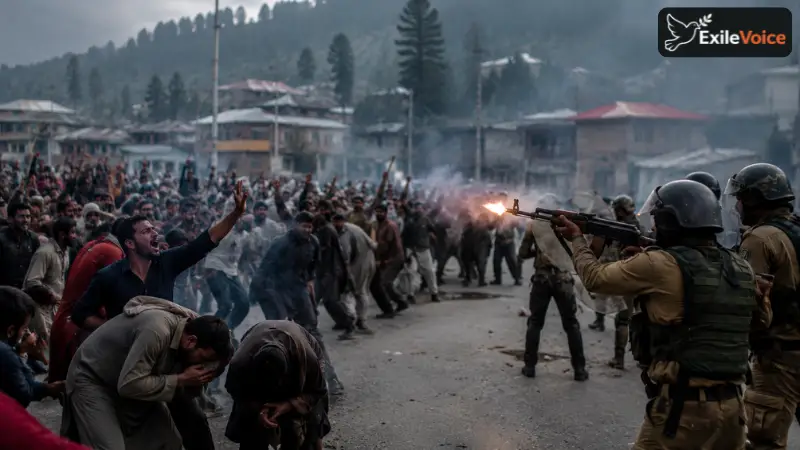
The situation in Azad Kashmir has reached a critical juncture, marked by persistent unrest and heightened tensions. Recent footage emerging from the region indicates that security forces, including rangers, police, and military personnel, have continued using direct live ammunition against civilian protesters. This ongoing conflict, which intensified significantly over the past two months, has resulted in a mounting death toll exceeding 80 fatalities. The continuation of such aggressive measures has sparked widespread alarm, prompting human rights advocates and international observers to question the proportionality and necessity of the state's response.
Compounding the humanitarian crisis is a severe clampdown on the press. Local media outlets are heavily regulated, often broadcasting government-approved narratives while ignoring the ground reality of civilian casualties. Furthermore, international media organizations, including BBC and Al Jazeera, have faced aggressive censorship. Al Jazeera's transmission has been completely blocked, a move that places the administration alongside very few global regimes that restrict the broadcaster. Recent directives from the Ministry of Information have instructed international journalists to exit Azad Kashmir entirely, while also demanding exhaustive dossiers and credential lists of all reporting staff. This systematic silencing of independent journalism aims to shroud the unfolding humanitarian crisis in obscurity, drawing sharp criticism from global press freedom advocates who warn that the region is sliding further into authoritarian isolation.