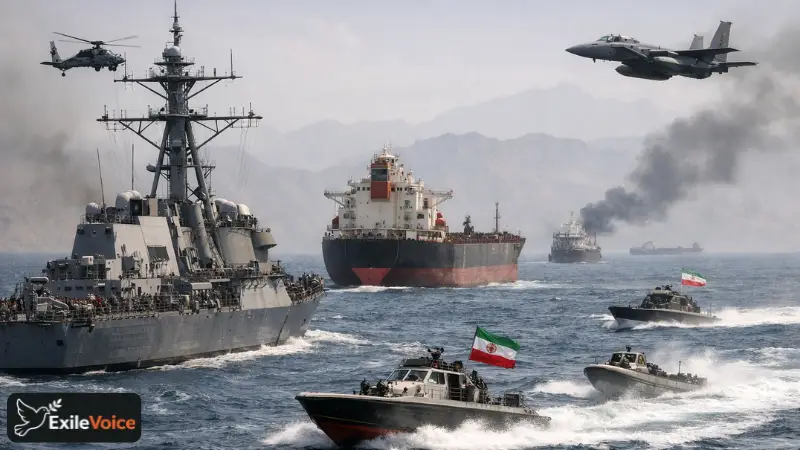
The geopolitical landscape of the Middle East is currently witnessing a tectonic shift as reports emerge of a potential naval blockade of Iran, orchestrated by the Trump administration. This strategic maneuver aims to enforce a complete closure of the Strait of Hormuz, one of the world's most critical maritime chokepoints. For decades, the Strait of Hormuz has served as the primary artery for global energy supplies, with nearly 20% of the world's daily oil consumption passing through its narrow waters.
The rationale behind this drastic escalation appears to be a multi-pronged approach to cripple the Iranian economy while simultaneously pressuring international stakeholders, most notably China, to intervene in regional peace negotiations. Since the onset of recent regional conflicts, Iran has managed to double its oil exports, reaching nearly 2.2 million barrels per day, primarily destined for Chinese markets. By implementing a naval blockade, the United States intends to sever this financial lifeline, forcing Tehran to the negotiating table under immense economic duress.
However, the implications of such a move extend far beyond the shores of the Persian Gulf. A full closure of the Strait of Hormuz would inevitably lead to a catastrophic spike in global oil prices. International markets are already reacting with volatility, as the prospect of a prolonged disruption in supply chains threatens to destabilize global inflation targets. Strategic analysts suggest that Trump’s logic hinges on the belief that once the energy flow is completely halted, China will be compelled to use its significant leverage over Iran to secure a diplomatic resolution.
The "Hormuz Dilemma" lies in the delicate balance of power. Iran has historically maintained that its sovereignty over the Strait is absolute and has frequently threatened to close the passage in response to foreign aggression. The current situation is further complicated by recent failed negotiations in Islamabad, where the primary "bone of contention" was the immediate reopening of the Strait. Iran remains adamant that it will not concede control without a full restoration of its frozen assets and a guarantee of non-aggression from the West. As the naval blockade tightens, the risk of a direct kinetic engagement between U.S. and Iranian naval forces grows, potentially plunging the region into an uncontainable conflict.