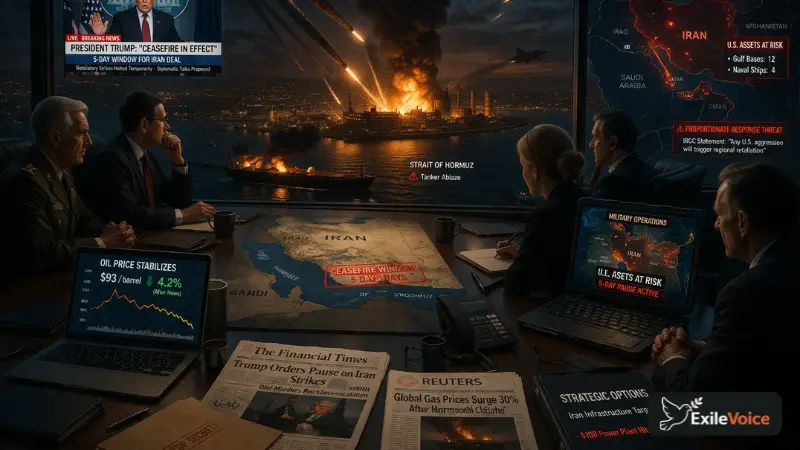
The recent declaration by President Donald Trump regarding a five-day pause in military operations against Iranian infrastructure has sent shockwaves through the global diplomatic community. Following reports from Israeli media, Reuters, and the Financial Times, it appears that the United States is testing the waters for a ceasefire, though the motivations behind this move remain a subject of intense scrutiny. Trump claimed that a strike on a major Iranian power plant, valued at approximately $10 billion, was imminent and would have been decimated in a "blink of an eye" had he not chosen to delay.
However, the narrative of "victory" declared by the Trump administration is complicated by the ground reality in the Middle East. While Washington suggests that Tehran initiated contact to avoid total infrastructural collapse, Iranian officials and the Supreme National Security Council have flatly denied any direct negotiations. The "wounded gladiator" stance of Iran persists as they continue to launch retaliatory missile waves against Israeli and regional targets, asserting that every U.S. strike will be met with a proportionate response against Gulf allies.
The primary driver for this sudden diplomatic pivot appears to be economic. The global energy market has been severely destabilized, with oil prices surging and gas prices in Europe rising by 30%. The partial destruction of Qatar's gas facilities and the closure of the Strait of Hormuz have created an energy crisis that eclipses the 1970s oil embargo in severity. By announcing a potential deal, Trump successfully cooled the markets temporarily, bringing oil down to approximately $93 per barrel.
Furthermore, the domestic political landscape in the U.S. is becoming increasingly hostile to a prolonged conflict. With 88% of Americans reportedly opposing the war and mid-term elections approaching, the administration is desperate for a "win" that does not involve boots on the ground or a total economic meltdown. The strategy now seems to be one of "controlled degradation", weakening Iran’s infrastructure and economy to the point where internal governance fails, rather than attempting a high-risk regime change through direct military occupation.