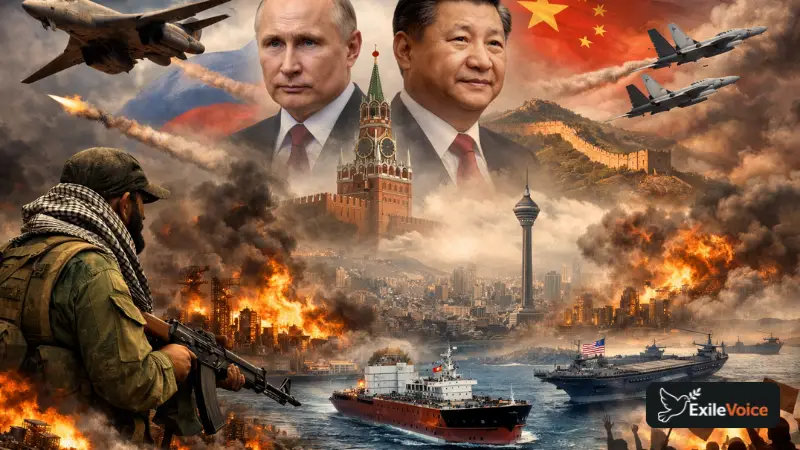
The current escalation in the Middle East has transcended a localized conflict, evolving into what analysts call "The War About the War." While physical kinetic actions take place on the ground and in the skies over Tehran, a more complex battle of narratives, alliances, and economic interests is unfolding globally. The involvement of major world powers, specifically Russia and China has fundamentally altered the stakes of the confrontation between Iran and the Western-led coalition of the United States and Israel.
According to recent intelligence and analysis, the Iranian defense posture has been significantly bolstered by strategic warnings from Moscow and Beijing. Reports indicate that as American B-1 Lancer supersonic bombers were being mobilized for potential strikes against Iranian targets, early warnings from Chinese and Russian intelligence allowed Iranian assets to reposition, potentially neutralizing the intended impact of the mission. This level of coordination suggests that Iran is no longer operating in isolation; it is a critical node in a broader Eurasian alliance that seeks to challenge Western hegemony in the region.
Furthermore, the economic dimension of this war is being played out in the Strait of Hormuz. Despite the heightened tensions and the deployment of naval assets, the strait remains a selective corridor. Iranian oil exports to China have not only continued but have reportedly increased. The United States finds itself in a precarious position: while it aims to squeeze the Iranian economy, it cannot risk a direct confrontation with Chinese-flagged vessels or tankers destined for Chinese ports without triggering a massive global economic crisis or a direct conflict with Beijing. This creates a "protected lane" for Iranian commerce, undermining the effectiveness of the blockade against those nations that have actively participated in or supported strikes against Iranian territory.
The domestic political landscape in the United States is equally fractured. While some hardline voices call for the total "flattening" of Gaza and Iran,drawing parallels to the destruction of Hiroshima and Nagasaki,there is a growing chorus of dissent from progressive lawmakers. Voices like Representative Sara Jacobs and Senator Chris Van Hollen have raised alarms about the environmental and humanitarian catastrophes unfolding, such as the toxic air quality in Tehran following attacks on oil infrastructure. This internal friction highlights a lack of a clear "end game," suggesting that the current strategy may be reactionary rather than visionary.