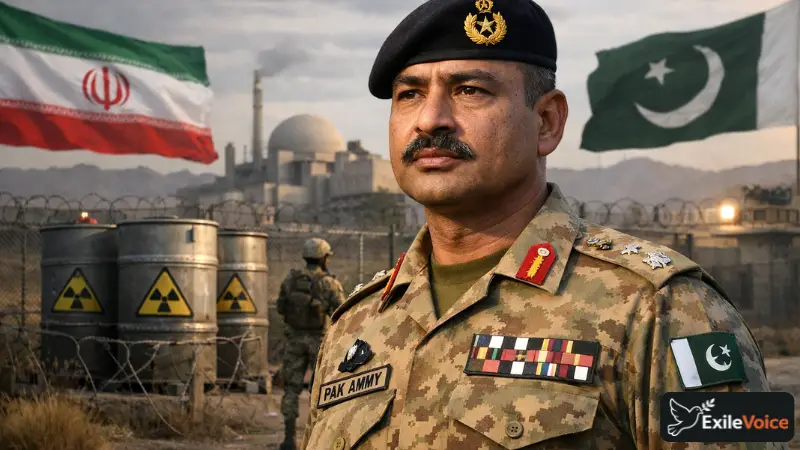
As the US-Iran peace negotiations reach a critical juncture, a revolutionary proposal has emerged from the "Islamabad Talks Round Two." The primary hurdle in any accord between Washington and Tehran has always been the issue of trust, specifically regarding Iran’s stockpiles of enriched uranium. Current reports suggest that a compromise is being brokered by Pakistan to resolve the deadlock between Iran’s five-year enrichment halt offer and the United States’ demand for a twenty-year moratorium. The solution? Pakistan may act as a third-party "safe-keeper" or custodian for Iran’s enriched uranium.
Intelligence and security circles are buzzing with the possibility that approximately 450 kilograms of Iranian enriched uranium could be transported to Pakistan for storage. This move would address the fundamental "trust deficit" by removing the material from Iranian soil while ensuring it remains under the guardianship of a declared nuclear power. Pakistan’s military, which maintains a rigorous command and control structure for its own nuclear arsenal and complies with international safeguard standards, is uniquely positioned to handle such a sensitive task.
The logic behind selecting Pakistan as the custodian is multifaceted. Unlike Russia, which held Iranian uranium under the 2015 JCPOA, Pakistan currently enjoys a renewed diplomatic "honeymoon" with the Trump administration while maintaining a neighborly, albeit complex, relationship with Iran. By placing the material in Islamabad's hands, the US gets the immediate security of knowing the "ingredients for a bomb" are out of Iran's reach, while Tehran receives a guarantee that its assets are held by a non-Western neighbor that understands the strategic value of nuclear technology.
This development, if confirmed, would represent the most significant achievement of the mediation process to date. It essentially transforms Pakistan from a diplomatic messenger into a functional guarantor of global nuclear security. However, the risks are equally high. Taking custody of another nation's sensitive materials places Pakistan at the center of a potential "breakout" crisis if the deal fails. It also requires unprecedented cooperation between Pakistani security forces and international monitors to ensure the material is neither tampered with nor used to enhance Pakistan's own capabilities.
While the Trump administration continues to criticize the original 2015 deal as "garbage," the emerging framework looks remarkably similar, albeit with a new "custodian" model. For President Trump, this allows him to claim he has achieved a "better" deal than his predecessors. For Pakistan, it cements the country's status as an indispensable nuclear state. The coming weeks will reveal if this proposal becomes the cornerstone of the final signed agreement, potentially reshaping the non-proliferation landscape for the next decade.