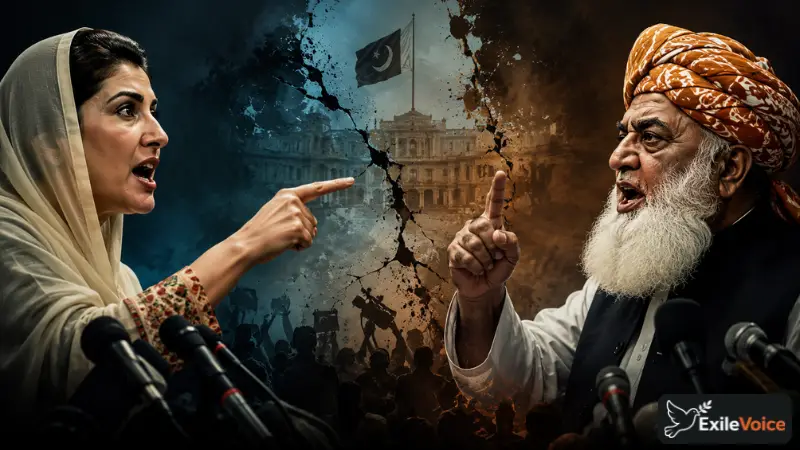
In the complex tapestry of Pakistani politics, a new trend has emerged that challenges the boundaries of civil discourse. Recent events, specifically the intense public exchange between Ayesha Gulalai and Maulana Fazlur Rehman, highlight a shift toward deeply personal, and at times vitriolic, political attacks. This phenomenon is increasingly dominating national conversation, often at the expense of substantive policy debates.
The nature of these accusations is unprecedented. By utilizing national media platforms to level highly sensitive and culturally taboo allegations, the discourse has moved beyond ideological disagreement into a realm of character assassination. Such strategies, while perhaps intended to garner short-term headlines or damage an opponent's public standing, risk further eroding the already fragile trust in political institutions.
Critics argue that this style of politics, often characterized by the use of inflammatory rhetoric to frame opponents as traitors or moral transgressors, is a symptom of a deeper malaise. When political actors prioritize humiliating their rivals over addressing the pressing concerns of the populace, the democratic process suffers. Furthermore, the role of media in amplifying these narratives is significant. By providing a stage for such vitriol, media outlets contribute to the polarization of the public, making consensus-building nearly impossible.
The danger of this trajectory is two-fold. First, it normalizes a level of aggression that is detrimental to political stability. When personal attacks become the primary tool of political combat, the space for civil debate and negotiation disappears. Second, it shifts the focus away from governance. As citizens are treated to a spectacle of insults and accusations, the critical issues of economic management, security, and institutional reform are sidelined. For Pakistan to navigate its current challenges, a shift toward issue-based politics and a rejection of personal vilification is not just necessary; it is vital for the health of its political landscape.