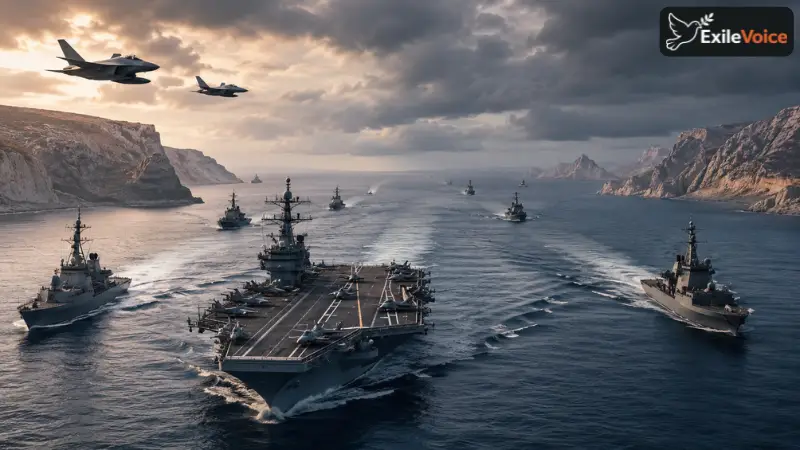
The geopolitical landscape of the Persian Gulf, a region already strained since mid-2025, has entered a new phase of volatility as of July 14, 2026. U.S. President Donald Trump has formally notified Congress of the commencement of a naval blockade by the U.S. Central Command (CENTCOM), aimed at effectively halting all Iranian maritime trade. This action marks a significant escalation, as it restricts not only Iranian oil exports but also halts any import or export activities originating from or destined for Iranian ports.
Beyond the blockade, President Trump has declared a policy of establishing total control over the Strait of Hormuz, effectively seeking to occupy the Iranian coastal belt, including areas housing IRGCN naval facilities and infrastructure. This move comes alongside the imposition of a 20% "protection fee" on all international shipping passing through the region, a measure intended to offset the costs of U.S. naval protection for cargo transiting the area. This policy has faced immediate criticism from international bodies, including the International Maritime Organization (IMO), which has deemed such levies inconsistent with established maritime law.
The strategic intent behind these actions appears to go beyond maritime security. Analysts suggest that the U.S. administration aims to degrade Iran’s defensive capabilities, particularly its naval and missile infrastructure along the coast. While the administration justifies these steps as necessary for security and economic stability, they have effectively undermined previous diplomatic efforts to establish a neutral mechanism for regional transit through the Strait of Hormuz.
Furthermore, the regional conflict has seen new developments involving the Houthis, who have reportedly launched missiles toward Saudi Arabia. This action, which challenges a four-year period of relative stability, follows reported Saudi airstrikes on Sana’a airport, purportedly aimed at preventing Iranian-linked aircraft from landing. These events underscore the deepening involvement of various regional actors in this theater of conflict. The U.S. decision to utilize naval drones in its campaign against Iran further emphasizes a shift in tactical approaches to the region. As of July 2026, the global impact of these events, including spikes in oil prices, remains a critical focal point for international observers and policymakers alike.