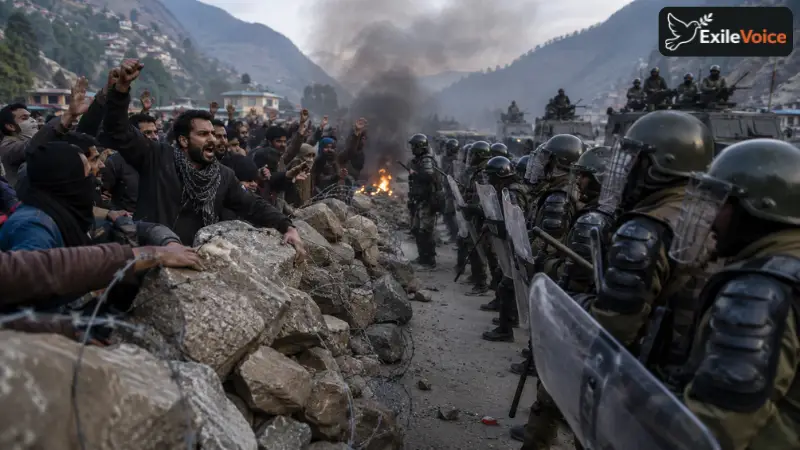
The situation in Azad Kashmir has deteriorated significantly, marked by ongoing civil unrest, violent clashes, and a high casualty toll that has drawn international attention. Reports indicate that at least 28 people have been killed over several weeks of intense protests involving the Jammu Kashmir Awami Action Committee. Despite these developments, there has been limited reporting from local mainstream media, leaving international news outlets to document the severity of the crisis.
The protesters have been demanding better services and addressing grievances related to local governance. However, the movement has been met with a heavy crackdown. There have been disturbing allegations regarding the infiltration of protest sites by law enforcement personnel allegedly disguised as protesters, carrying foreign currency to frame the movement as foreign-sponsored or linked to intelligence agencies like RAW. One such individual was reportedly apprehended by locals and confessed to being a police official tasked with dropping currency notes to undermine the credibility of the movement.
This atmosphere of distrust is further compounded by allegations regarding the illicit cultivation of opium in the region, which some political leaders claim is being encouraged to fund local militias. These accusations have added a layer of geopolitical complexity to an already volatile situation. In response to the crisis, political figures like Bilawal Bhutto have reportedly initiated efforts to propose a "Truth and Reconciliation Commission" to address the events of the past month and mediate between the government and the protesters.
The humanitarian impact is profound, with reports of families being unable to retrieve the bodies of their loved ones and a widespread feeling of alienation among the youth. As the situation remains tense, there are urgent calls for a peaceful resolution and transparent dialogue to prevent further loss of life and to address the deep-seated structural issues fueling the unrest in the region.