The modern geopolitical landscape is increasingly defined by technological capability, with semiconductor manufacturing and artificial intelligence serving as central pillars of national sovereignty and strategic power. This shift was clearly demonstrated during Prime Minister Narendra Modi’s multi-nation European tour in May 2026, which concluded with a major technological agreement signed in the Netherlands. The formal contract between Advanced Semiconductor Materials Lithography (ASML), the world leader in photolithography systems, and Tata Electronics represents a significant advancement in South Asia's technology sector. This partnership, built around an $11 billion investment to establish a fabrication facility in Gujarat, aims to produce 300mm silicon wafers by 2028. This move is designed to transition India from a technology importer into a foundational component of the global semiconductor supply chain.
From a strategic perspective, this initiative addresses a key vulnerability in India’s industrial framework. Despite its strong software engineering sector, India has historically relied on external sources for advanced microprocessors, importing significant volumes of critical components directly from mainland China. By securing a direct transfer of lithographic capabilities from ASML, New Delhi is working to insulate its domestic automotive, telecommunications, and defense industries from external supply chain disruptions. This initiative aligns with a broader sovereign strategy to establish domestic production capabilities for dual-use technologies, which are essential for driving advanced machine-learning models, automated manufacturing, and modern military hardware.
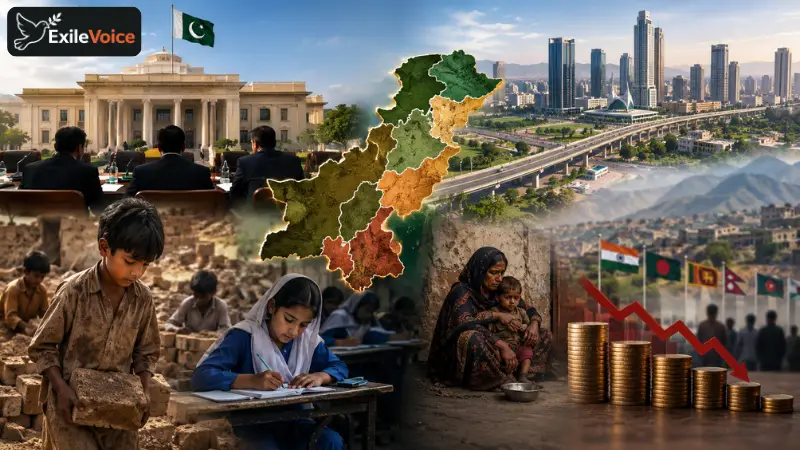
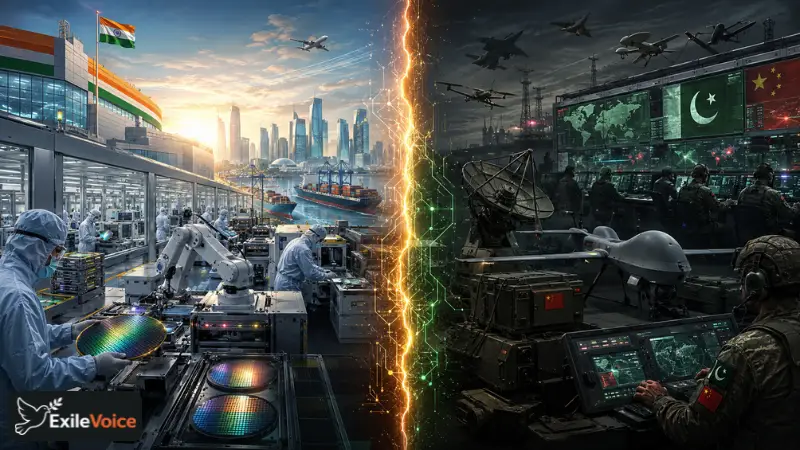
This industrial expansion contrasts sharply with the technological model pursued by Pakistan, exposing a widening structural divergence in how both nations approach technological development. Pakistan’s engagement with advanced electronics and artificial intelligence remains almost exclusively focused on the military sector, largely managed under the specialized procurement and development wings of the Pakistan Air Force. While this targeted approach has produced notable operational outcomes, such as the effective integration of automated command-and-control networks during the border skirmishes of May 2025, it remains constrained by structural financial limitations. Lacking the capital reserves and industrial infrastructure required to develop independent fabrication facilities, Pakistan has adopted an end-user model heavily reliant on Chinese technological integration.
This systemic difference highlights two distinct philosophies of national security and economic planning. India’s approach focuses on commercial, state-backed technology transfers designed to build deep industrial infrastructure. By anchoring its semiconductor initiatives within commercial conglomerates like Tata Electronics, India integrates its sovereign defense requirements into the global commercial market. This approach attracts international capital and embeds New Delhi into Western technology supply chains. Conversely, Pakistan's model relies on imported, integrated defense systems. While this delivers immediate operational readiness, it lacks the broader economic benefits generated by domestic commercial manufacturing, leaving the country exposed to long-term technological dependencies.
This technological division has significant implications for the balance of power in South Asia. As microprocessors increasingly dictate military capability, from autonomous drone networks to advanced electronic warfare, the long-term advantage is shifting toward nations that control the foundational manufacturing processes. India’s focus on domestic component fabrication provides a path toward technological self-reliance and deep integration with global supply chains. Meanwhile, Pakistan’s reliance on external technology partners ensures that its long-term strategic capabilities remain tied to the economic and industrial priorities of its external suppliers. This structural divergence demonstrates that in modern geopolitics, industrial manufacturing capacity is becoming just as critical as conventional military hardware.