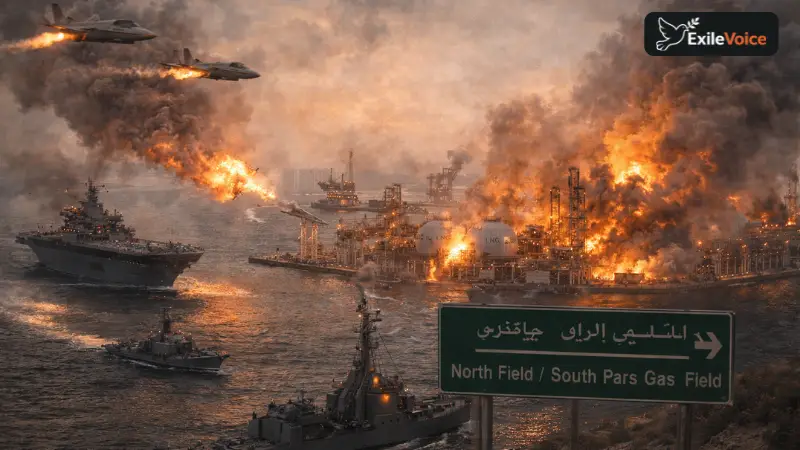
As the regional conflict enters its third week, the strategic focus has shifted from traditional military engagements to a sophisticated war of attrition centered on the Persian Gulf’s energy architecture. The "North Field" or "South Pars" gas field, the world’s largest offshore gas reservoir shared between Qatar and Iran, has emerged as the most volatile flashpoint in the current crisis. Recent events suggest that the initial tactical successes of the US and its allies are being overshadowed by a "zero restraint" retaliatory policy that threatens to dismantle the global energy supply chain.
The administration in Washington is currently grappling with a profound internal crisis as the costs of maintaining a high-intensity naval and air presence in the Gulf skyrocket. Reports indicate that the Pentagon has requested an emergency funding package exceeding $200 billion to sustain operations. This financial burden is compounded by the fact that stealth assets, once thought to be invincible, are facing unprecedented attrition rates. The technical reality on the ground shows that regional forces have successfully utilized asymmetric swarming tactics and precision electronic warfare to degrade the effectiveness of high-end Western platforms.
Economically, the stakes could not be higher. The disruption of LNG exports from Qatar, following alleged retaliatory strikes, has sent shockwaves through European and Asian markets. Brent crude oil prices remain stubbornly high despite significant releases from the US Strategic Petroleum Reserve and international efforts to stabilize the market. This scenario has created a "petro-political" stalemate where military power is increasingly decoupled from economic security. The administration’s recent attempts to offer "guarantees" to Iran regarding gas field safety highlight a desperate need to prevent a full-scale global recession triggered by energy scarcity.
Furthermore, the diplomatic unity once seen among NATO allies is fracturing. European nations, more directly exposed to energy shortages than the US, are beginning to pursue independent diplomatic channels to de-escalate the situation. The cancellation of high-level state visits and the emergence of "alternative currency" settlements for energy trades, such as the reported use of Yuan in Russian-Japanese transactions, signal a broader decline in the traditional hegemony of the petrodollar. As the conflict continues, the Persian Gulf is not just a theater of war but the epicenter of a fundamental shift in the global economic order.