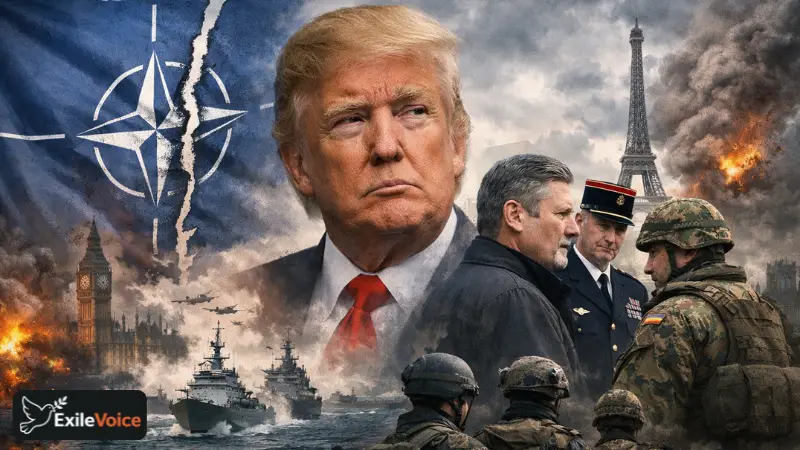
The architectural integrity of the North Atlantic Treaty Organization (NATO), the world’s premier military alliance since the post-World War II era, is currently facing its most significant existential threat. Recent rhetoric from President Donald Trump has transitioned from mere criticism of defense spending to a fundamental questioning of the alliance's utility. By labeling NATO a "paper tiger" and suggesting an American withdrawal is "beyond reconsideration," Trump has sent shockwaves through European capitals, forcing a rapid recalibration of regional security strategies.
This shift is not merely academic; it has practical implications for the ongoing conflict in Ukraine and the broader security of Western Europe. The "America First" doctrine, once seen as a temporary political pivot, now appears to be a structural change in how the United States views its overseas commitments. Trump’s directive for Europe to "fight their own battles" and secure their own energy interests marks a departure from decades of US-led security guarantees. This isolationist stance has left traditional allies like the United Kingdom, France, and Germany in a precarious position, grappling with the reality of a potentially headless alliance.
In response, British Prime Minister Keir Starmer has begun to assert a more prominent leadership role. Despite facing public criticism regarding the state of the Royal Navy and Britain's overall military readiness, the UK is moving to convene a high-level summit involving 35 nations. This diplomatic push aims to address critical security concerns, specifically the freedom of navigation in the Strait of Hormuz, without relying solely on American intervention. The tension between Washington’s erratic signals and London’s attempt at stabilizing the coalition illustrates a deepening rift that could redefine 21st-century geopolitics.
Furthermore, the internal dynamics of the alliance are being tested by shifting domestic politics within member states. As the United States moves toward a more protectionist and less interventionist foreign policy, European nations are being forced to accelerate their own defense integration. The challenge lies in harmonizing the varying interests of 35 diverse nations while facing a resurgent Russia and a volatile Middle East. The "paper tiger" comment serves as a catalyst, pushing Europe to prove that its military and diplomatic collective can function as a "real lion," even if the American eagle chooses to retreat from the nest.