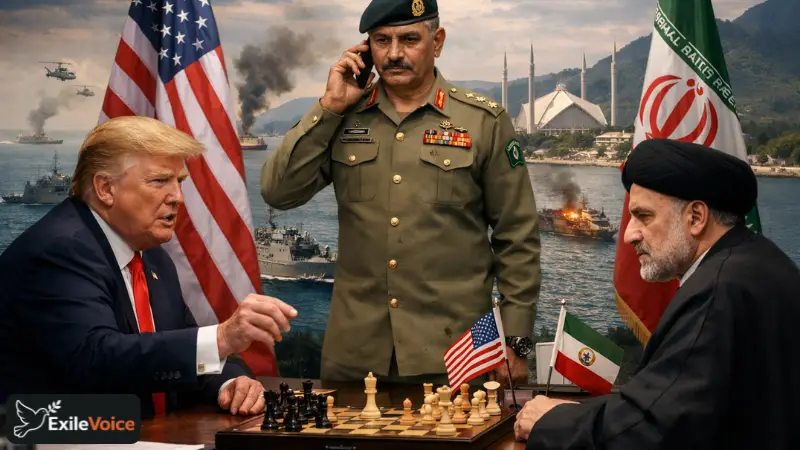
The geopolitical landscape is currently witnessing a high-stakes chess match centered in Islamabad, where international mediators are working tirelessly to bridge the widening chasm between the United States and Iran. At the heart of this diplomatic storm is the Strait of Hormuz, a vital maritime artery for global energy supplies. Recent reports indicate that Iran has formally declined to participate in the upcoming round of negotiations scheduled in the Pakistani capital, citing a profound lack of trust in the American administration led by President Donald Trump.
Tehran’s grievance stems from what it perceives as deceptive maneuvers by Washington. Iranian officials argue that while the U.S. signals a desire for dialogue at the negotiating table, its actions on the ground, specifically the continued military blockade of the Strait of Hormuz, contradict these diplomatic overtures. From the Iranian perspective, the blockade is not merely a tactical maneuver but a fundamental impediment to sincere engagement. They contend that as long as the U.S. maintains this aggressive posture, any discussion of a "new agreement" is futile.
In a surprising turn of events, the role of Pakistan's military leadership has come to the forefront. Reports suggest that General Asim Munir has been in direct communication with President Trump, acting as a pivotal intermediary. During a high-level call, the General reportedly urged the U.S. President to reconsider the blockade, framing it as a primary obstacle to the success of the Islamabad peace talks. This intervention underscores Pakistan's unique position as a regional power capable of facilitating dialogue between traditional adversaries.
President Trump’s reaction to this suggestion has been characteristic of his unconventional diplomatic style. While he has publicly criticized Iran for recent skirmishes, citing incidents where shots were fired near French and British commercial vessels, he also appears to be weighing the strategic benefits of de-escalation. Trump has highlighted the staggering economic cost of the current tensions, noting that disruptions in the Strait of Hormuz are resulting in losses of approximately $500 million daily.
The situation remains fluid and fraught with contradictions. On one hand, the U.S. threatens catastrophic damage to Iranian infrastructure if an agreement is not reached; on the other, there are whispers that the administration might actually lift the blockade to bring Tehran back to the table. For Iran, the calculation is rooted in a position of perceived strength. Despite crippling international sanctions, Tehran feels it has leveraged its control over the Strait to create significant economic pressure on global powers, leaving them with little more to lose and everything to gain through steadfastness.
As the American negotiating team prepares to depart for Islamabad, the world watches to see if the "door of dialogue" will remain open or slam shut. The potential for a breakthrough exists, but it requires a delicate balancing of security concerns and economic interests. Whether through a formal new agreement or a series of tactical concessions, the resolution of the Hormuz crisis remains the most pressing challenge for international stability in the current year.