

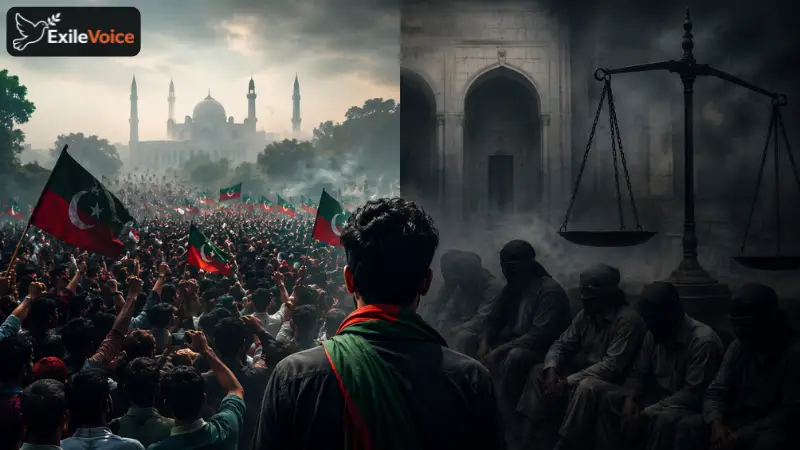
The political landscape in Pakistan continues to undergo significant shifts, characterized by evolving strategies of resistance and government reactions. A primary focal point of current discourse is the approach taken by the Pakistan Tehreek-e-Insaf (PTI) regarding its announced protest on August 5th. This event has sparked extensive debate regarding the efficacy of one-day protests versus sustained movements.
Critics of the one-day protest model argue that such limited engagement fails to produce tangible results, often serving more as a photo opportunity than a genuine instrument of political pressure. Comparisons are frequently drawn to past, ineffective hunger strikes that were quickly abandoned. The call for a more consistent, prolonged, and humanitarian-focused protest, emphasized by figures such as Aleema Khan, highlights a growing consensus within segments of the party that short-term tactics are no longer viable.
The strategic dilemma for opposition parties in Pakistan is multifaceted. They must navigate a precarious environment where activists face the risk of detention, while simultaneously needing to maintain momentum to advocate for core demands, such as the provision of proper medical care and improved conditions for leaders like Imran Khan. The suggestion that these protests should be reframed from purely political maneuvers to humanitarian advocacies reflects an attempt to bypass traditional political gridlock and appeal directly to public empathy.
Furthermore, the legal environment in Punjab is undergoing a controversial transformation. Reports indicate the development of special case tribunals, where a Grade 20 officer has the authority to declare any case "sensitive" or "special." This designation would render all proceedings, including the identities of judges, witnesses, and prosecutors, anonymous. Critics view this as a potential tool to suppress dissent, as it moves trials from open courts into a opaque, secret process, raising significant concerns about due process and the potential for politically motivated sentencing.

