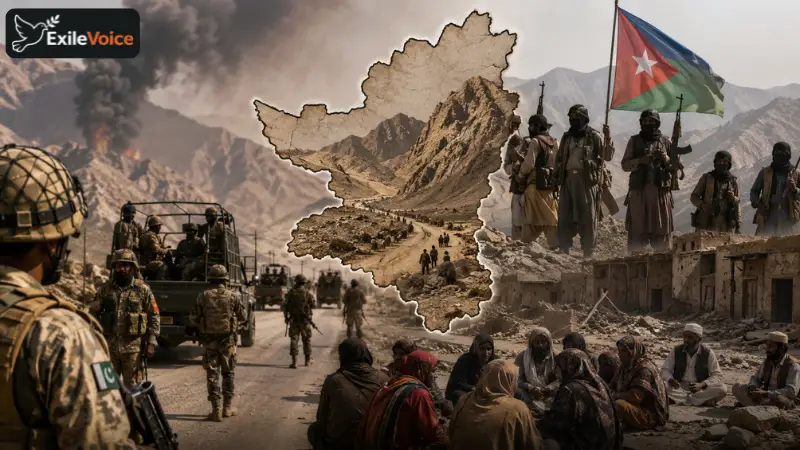
The security situation in Balochistan has reached a critical intensity, characterized by an increase in coordinated attacks on state security forces and a growing challenge to the central administration’s control. Recent events, including violent assaults on military convoys and the targeting of personnel in areas such as Mastung, highlight the tactical shifts in the insurgency.
Independent reports and regional observers note that the conflict has become increasingly complex, with groups like the Balochistan Liberation Army (BLA) expanding their operational reach. Furthermore, there is a strategic shift in the concentration of militant activities, with an increased emphasis on northern, Pashtun-dominated areas of the region. This evolution in the security environment is compounded by an apparent intelligence failure that has allowed militant groups to strike with significant impact, causing casualties among security personnel and challenging the state's narrative of stability.
A particularly concerning development is the decision by the Republic of Balochistan dissidents to initiate an independent census. This move represents a direct challenge to the state's administrative authority, as these groups seek to bypass official government data collection to implement their own socio-economic and demographic planning. By declaring their own policies on education, resource management, and economic strategy, these groups are attempting to establish a parallel state apparatus.
The government’s response, characterized by large-scale military operations utilizing heavy artillery and air support, has yet to suppress the insurgency. Instead, the persistent cycle of violence has fueled public frustration and alienation. Experts suggest that a purely kinetic response is failing to address the underlying grievances of the local population. For long-term peace in Balochistan, a fundamental shift from purely military interventions to comprehensive political dialogue and reconciliation is essential to stabilize the region and mitigate the influence of insurgent groups.