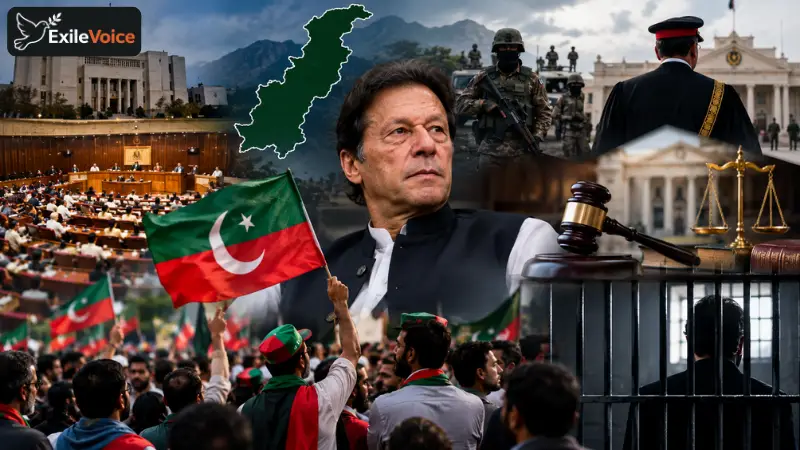
The current sociopolitical landscape in Pakistan, particularly concerning regions like Azad Kashmir, Balochistan, and the tribal areas, highlights a deep-seated crisis of governance that transcends individual leadership. A critical analysis of recent events, including public protests and the response from the Joint Awami Action Committee, suggests that the existing organizational structure of Pakistan’s military and state apparatus is fundamentally flawed.
At the heart of the issue is the concentration of absolute power within the office of the Chief of Army Staff (COAS). This model, which lacks sufficient checks and balances or accountability to civilian democratic institutions, has led to a centralization of decision-making that is ill-equipped to handle regional grievances. When crises arise, the lack of an independent, functional, and representative governance structure, including a robust parliament and judiciary, leaves the public with little recourse but to appeal directly to the military leadership, further blurring the lines between state security operations and public administration.
To move toward stability, Pakistan requires systemic institutional reforms. A potential roadmap for this transition involves dismantling the singular, monolithic power structure of the COAS. Instead, moving toward a system of diverse regional commands, each accountable to civilian leadership, such as the Prime Minister or President, would mimic models in stable democracies. This restructuring would shift the military’s focus toward a coordinated defense role, allowing for a clearer separation between national security and political administration, and ultimately fostering a more resilient governance framework. Without such structural changes, the current cycle of crisis, protest, and delay is likely to persist.