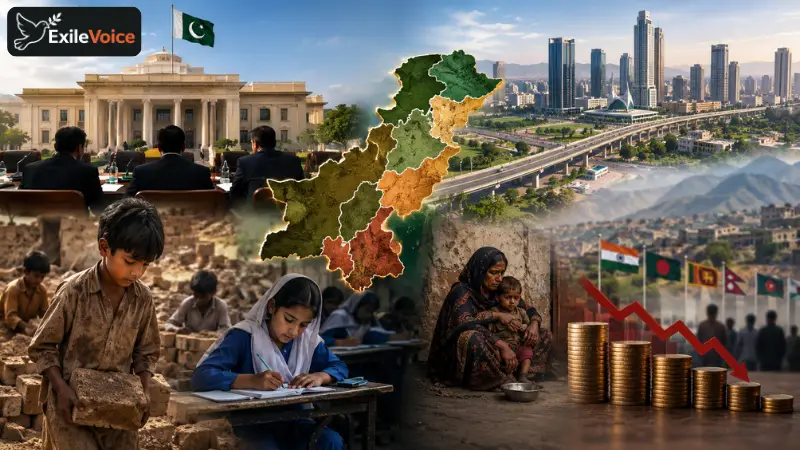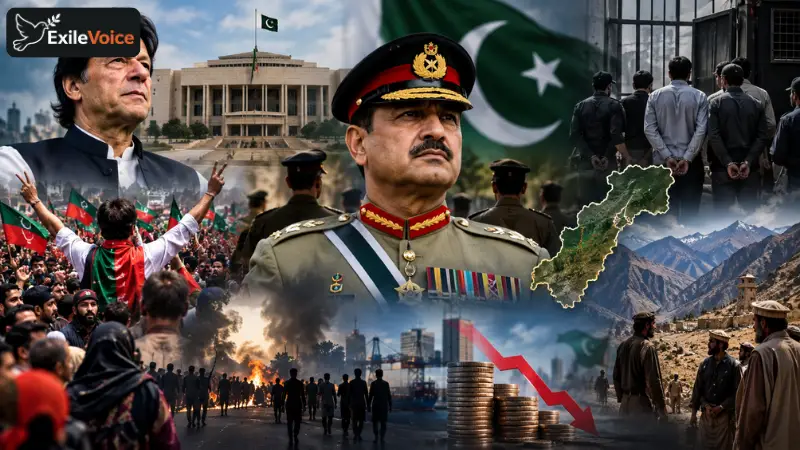
Pakistan currently finds itself at a precarious crossroads, where a deepening economic recession meets a systemic collapse of the public education and political sectors. The current administration, often referred to by critics as the "Form 47" government, faces a crisis of legitimacy that is further exacerbated by its handling of the country's most vital resource: its youth. While political leaders deliver impassioned speeches promising high-tech jobs and elite education, the reality on the ground tells a story of exploitation and systemic neglect.
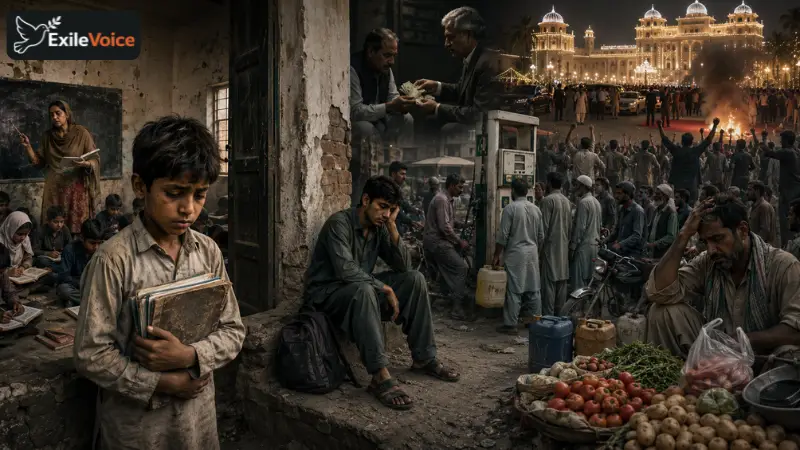
The state of the educational infrastructure is perhaps the most alarming indicator of national decline. Official government figures admit that between 26 and 30 million children are currently out of school, many forced into child labor or left to the streets. However, for those within the system, the situation is often no better. A recent investigative report revealed a disturbing trend in "privatized" or contracted public schools, where the "education mafia" thrives. In one documented case, a teacher, herself only possessing a matriculation-level education, was forced to sign for a salary of 17,000 PKR while being paid only 7,000 PKR. This systemic wage theft, sanctioned by the middlemen managing these institutions, is creating a generation taught by underqualified, exploited staff.
This domestic instability is mirrored in the streets. As petrol prices soar to over 415 PKR per liter, driven by a staggering 148 PKR in government taxes and levies, the common citizen is reaching a breaking point. Unlike previous political movements, recent protests in Lahore have seen an organic surge of laborers and youth taking to the streets without a formal call from political leadership. This "inflation fatigue" suggests that the traditional methods of state control may no longer be sufficient to suppress public dissent.
Furthermore, a growing disconnect between the ruling elite and the suffering populace is becoming visually and culturally apparent. While security forces in Bannu face deadly attacks, the capital and major cities witness lavish state celebrations and bizarre cultural displays. This dissonance, celebrating "economic turnarounds" while the average citizen cannot afford transport or basic schooling, creates a dangerous vacuum. If the opposition fails to provide a cohesive voice for this mounting frustration, the resulting social explosion could redefine Pakistan's political landscape in ways the current "Form 47" structure is ill-equipped to handle.