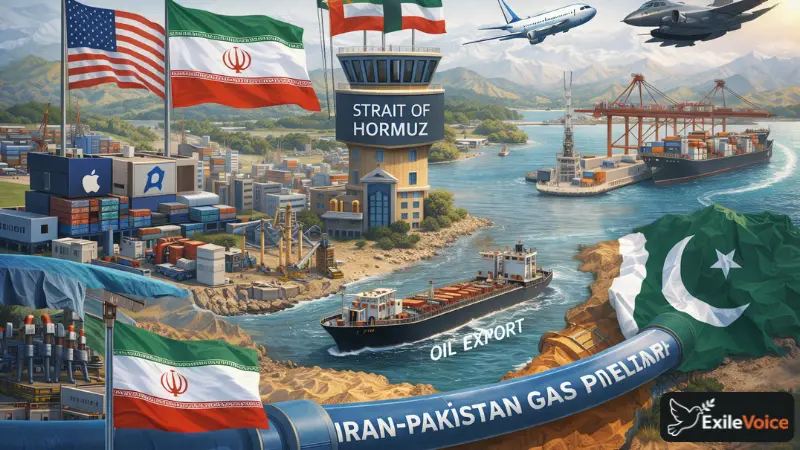
Beyond the diplomatic posturing and the search for a historic legacy, the proposed peace deal between the United States and Iran holds the potential for a massive economic reset in South and West Asia. The center of this economic transformation is the lifting of primary and secondary sanctions on Iran, a move that would fundamentally change the energy landscape for neighboring countries, particularly Pakistan. If the deal proceeds as outlined, the long-stalled Iran-Pakistan (IP) gas pipeline could finally see completion, providing Pakistan with the low-cost energy input required to make its exports competitive against regional rivals like Vietnam and Bangladesh.
The removal of sanctions would allow American corporations, including tech giants and aerospace firms, to re-enter the Iranian market for the first time in decades. This reintegration would likely lead to a surge in Iranian oil production and export, stabilized by a normalized relationship with the West. For the Pakistani regime, the economic dividend of this deal is a matter of political survival and legitimacy. Access to affordable Iranian energy and increased transit trade could provide the necessary stimulus to curb domestic inflation and improve the standards of living, potentially altering the political trajectory of the country ahead of future elections.
A critical and complex component of the negotiations involves the Strait of Hormuz. Iran’s recent efforts to assert sovereignty over this vital maritime corridor have created friction with global shipping interests. Any lasting peace deal will need to address "tolling" or transit rights. Analysts suggest a potential compromise involving a joint authority between Iran, Oman, and perhaps the UAE, ensuring that transactions remain within the dollar-based "Petrodollar" system to satisfy US financial interests while acknowledging Iranian territorial claims.
Furthermore, the deal addresses the "Access of Resistance" or Iranian-backed proxies. While the public focus remains on nuclear enrichment, the underlying security concerns of the US and its allies involve missile programs and regional militias. A comprehensive accord would likely necessitate Iranian guarantees regarding the security of shipping lanes and the cessation of hostilities between various regional factions. If successful, this would not only stabilize the Middle East but also position the region as a new hub for global investment, shifting the focus from conflict to commerce.