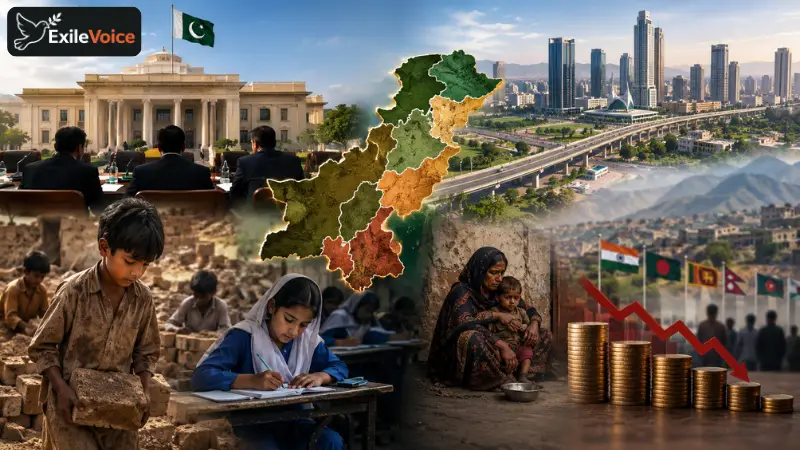
Pakistan’s current macroeconomic indicators reveal an unsustainably wide gap between its domestic financial consumption and its actual productive output. Recent financial data across an eleven-month fiscal window highlights a massive trade deficit hovering near thirty-five billion dollars, which is projected to approach forty billion dollars by the close of the fiscal year. This structural deficit indicates that the country's national expenditure on imports, debt servicing, and external obligations vastly outpaces its cumulative revenue from exports and industrial production. Currently, while domestic manufacturing and export sectors combine to generate roughly sixty billion dollars annually, the state's total spending obligations require approximately one hundred billion dollars, exposing a critical structural dependency on external capital inflows.
The primary stabilizing force preventing a complete balance of payments collapse remains the financial contributions of the global diaspora. Overseas Pakistanis consistently inject billions of dollars directly into the domestic economy through formal banking channels. These remittances serve as the lifeblood of national foreign exchange reserves and fund the basic consumption needs of millions of families across the country. Despite this existential economic reliance on the diaspora, domestic political rhetoric and legislative frameworks frequently display a deep prejudice against overseas citizens. Public debates concerning dual nationality often question the loyalty and patriotism of the diaspora, viewing external citizenships with unwarranted suspicion instead of recognizing them as an invaluable economic asset.
This domestic bias represents a glaring double standard within Pakistan's socio-political hierarchy. Local political actors, administrative officers, and institutional elites frequently engage in systemic corruption, tax evasion, and institutional mismanagement without ever holding foreign passports. Meanwhile, expatriate workers who labor under strict foreign legal frameworks and send clean capital back home find themselves politically marginalized. They are systematically denied basic voting rights and face public campaigns that question their commitment to the state. This defensive domestic narrative is often driven by local class anxieties, as families who successfully emigrate tend to achieve financial independence and stability far beyond what the volatile domestic economy can offer.
By framing dual citizenship as a sign of compromised patriotism, the domestic ruling elite successfully distracts from their own governance failures. Senior national leaders and major political dynasties routinely manage vast international property portfolios, establish offshore corporate structures, and secure foreign medical care while retaining their formal residency status at home. Labeling the ordinary diaspora as less Pakistani simply because they hold a foreign passport allows the domestic elite to extract maximum financial support from overseas workers while denying them any meaningful voice in the governance, economic direction, or political future of the country.