The international geopolitical landscape is currently undergoing a transformative period, marked by what many strategic analysts describe as a significant waning of United States influence. Recent events in the Middle East, particularly the ongoing friction between the U.S. and Iran, have accelerated a trend toward regional multi-polarity. Despite the immense military and economic pressure exerted by the administration in Washington, including targeted strikes on critical Iranian infrastructure, the consensus among global experts is increasingly leaning toward the conclusion that the U.S. is facing a strategic stalemate.
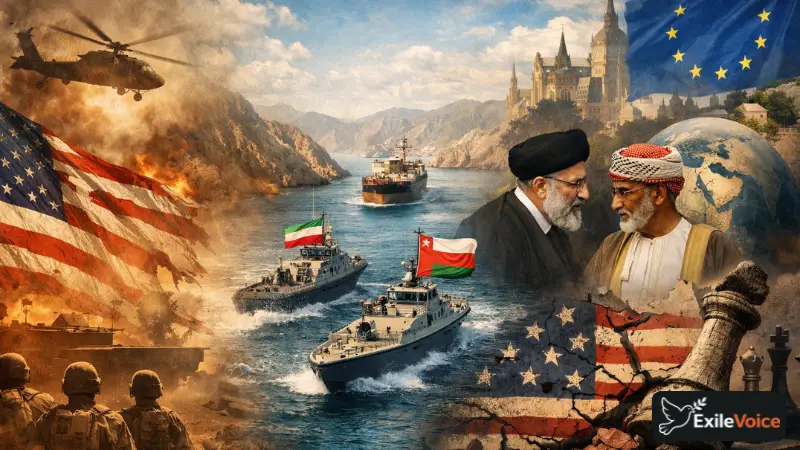
A pivotal development in this shift is the joint proposal by Iran and Oman for a new supervisory mechanism over the Strait of Hormuz. This initiative suggests the creation of a "Strait of Hormuz Authority," modeled after the Suez Canal Authority. By proposing a joint venture between the two nations that flank the most critical chokepoint of the waterway, Iran and Oman are effectively challenging the historical precedent of international or U.S.-led maritime policing. While international law, specifically the UN Convention on the Law of the Sea, generally protects natural waterways as free passage, the introduction of this concept marks a bold attempt to redefine regional sovereignty and economic control over energy transit.
Furthermore, the internal political climate in the United States is contributing to this perception of decline. The sudden dismissal of high-ranking military and legal officials, such as the Army Chief of Staff and the Attorney General, suggests a period of internal volatility. Analysts point out that when a global superpower's domestic leadership appears fragmented, its ability to project consistent power abroad is severely compromised. This internal polarization, often fueled by divergent ideological and religious mindsets within the U.S. electorate, has led to a foreign policy that some European allies describe as unpredictable and contradictory.
The European response to this instability is also telling. A recent non-public meeting of ten European heads of state in Helsinki resulted in a resolution that the current conflict in the Middle East is "not their war." This growing distance between the U.S. and its traditional NATO allies indicates a collapse of the post-WWII "West" as a unified strategic entity. European nations are increasingly looking toward "strategic autonomy," prioritizing their own geographical security and economic interests over the "maximum pressure" campaigns orchestrated by Washington.
Ultimately, the strategic logic of the current administration’s "unwise war" is being called into question. Rather than weakening Iran, the conflict has arguably empowered Tehran by allowing it to demonstrate its ability to disrupt global energy flows and force international negotiations on its own terms. As the U.S. considers further escalation, including the possibility of a ground invasion, the lessons of past protracted conflicts like Vietnam loom large, suggesting that the path of escalation may lead to a further erosion of American global standing.