Pakistan’s macroeconomic indicators reveal a severe and compounding fiscal crisis, characterized by unsustainable debt accumulation and a rapidly deteriorating domestic socio-economic fabric. Prominent macroeconomist Sakib Sherani recently highlighted a staggering trend: within a continuous four-year period, the state apparatus extracted over five trillion rupees in additional tax revenues from the domestic economy. This aggressive revenue extraction outpaces the cumulative tax increases implemented by various administrations over the preceding seventeen years combined. Despite this unprecedented fiscal burden placed on citizens and small enterprises, the state's financial position has weakened dramatically, pointing to systemic inefficiencies and unchecked state spending.
The structural failure of Pakistan's fiscal policy is most visible in its soaring sovereign debt profile. At the conclusion of the fiscal cycle in 2022, Pakistan’s total national debt stood at approximately 44 trillion rupees, an accumulation representing the entire 75-year history of the independent state. Astonishingly, by the end of the first quarter of 2026, official central bank metrics indicated that total sovereign debt had skyrocketed to 97.3 trillion rupees, rapidly crossing the psychological threshold of 100 trillion rupees shortly thereafter. This means the state accumulated more debt in less than four years than it did during its first seven and a half decades of existence. When combining the five trillion rupees in aggressive new taxes with the approximately 56 trillion rupees in fresh sovereign loans, the data reveals that over 60 trillion rupees in capital has been consumed by the state without generating sustainable economic growth or structural industrial development.
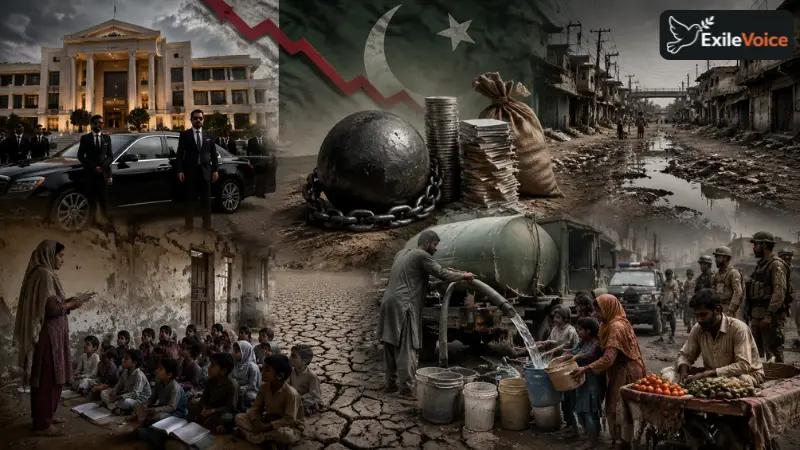
While macro-level capital reserves are depleted by debt servicing, the micro-level realities of public infrastructure and governance highlight a deep divide between the ruling elite and ordinary citizens. Across major industrial hubs like Gujranwala and peripheral districts like Dera Ghazi Khan, essential public services have largely collapsed. In Dera Ghazi Khan, local populations are entirely dependent on mobile water tankers provided by corporate military entities like Fauji Cement to secure basic potable water. Images of citizens using manual siphon pipes to extract water from commercial trucks into domestic buckets contrast sharply with the luxurious state protocols enjoyed by the country's bloated bureaucracy.
This institutional divide is further widened by a rigid organizational culture inherited from colonial administrative frameworks, where low-level bureaucratic officers operate with extensive security details and personal staff, completely detached from the economic realities of the public they serve. Concurrently, the education sector faces severe underfunding; recent state-sponsored educational initiatives named after political elites offer teacher salaries that fall below the legally mandated minimum wage for unskilled manual laborers. This systematic underinvestment in human capital, combined with aggressive tax enforcement on small market vendors and an elite-centric allocation of state resources, underscores the structural unsustainability of Pakistan's current governance model.