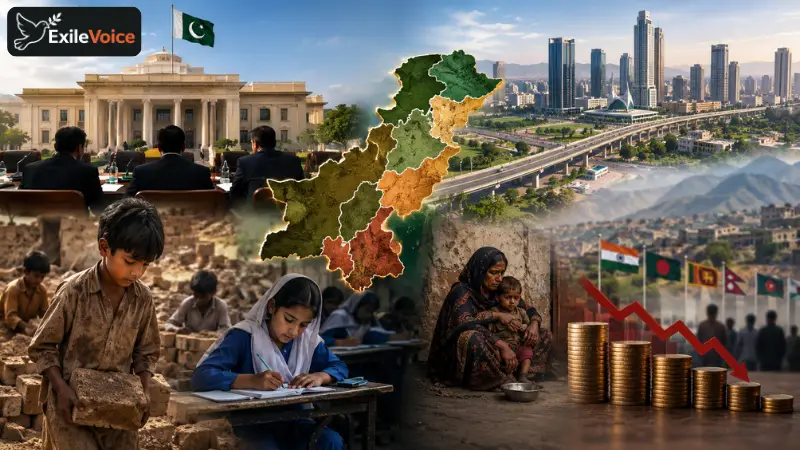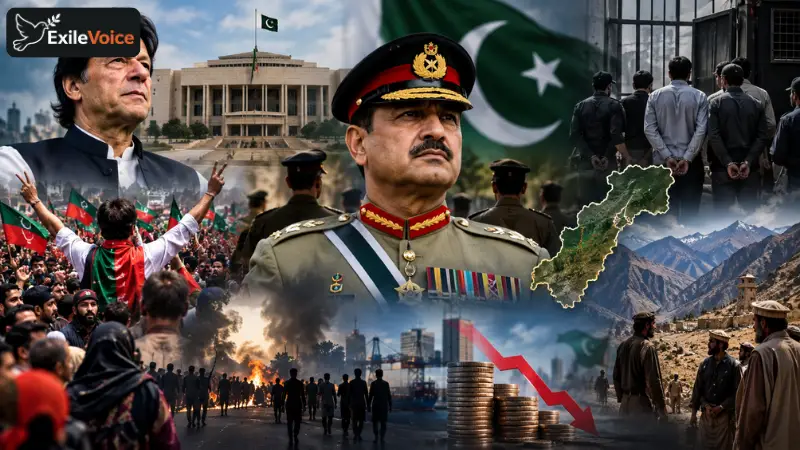
The economic narrative of Pakistan has transformed into a stark tale of two completely different worlds: one occupied by an elite ruling class insulated from fiscal pain, and another endured by the vast majority of citizens facing historic inflation. This economic disparity is not just a statistical reality; it has become a central point of public anger and political instability. The contrast between state luxury and public poverty highlights a deep systemic failure in the country's governance model.
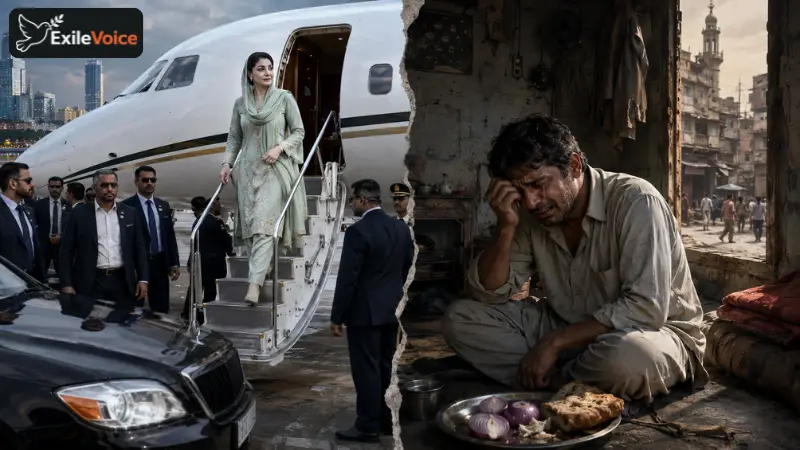
A striking symbol of this divide is the frequent international travel of Punjab Chief Minister Maryam Nawaz. Her recent official visit to Azerbaijan drew widespread public scrutiny, not because of the diplomatic agenda, but due to the mode of transport used. The deployment of a luxury state aircraft, valued at an estimated 12 billion rupees, for these frequent trips stands in sharp contrast to the state's ongoing economic crises. For a government that regularly appeals for foreign loans and implements aggressive tax hikes on the middle class, the continued use of high-cost luxury assets sends a message of extreme entitlement. The visual of a multi-billion-rupee state apparatus being used for public relations campaigns illustrates an elite class completely detached from the financial realities of the population.
In absolute contrast to this elite extravagance is the story of an ordinary citizen in Lahore, whose video recently went viral across digital platforms. The individual, a hardworking driver, broke down in tears while explaining his inability to pay his monthly house rent of 12,000 rupees. Forced to survive on raw onions and stale bread brought from home to avoid the cost of a basic hotel meal, his struggle represents the daily reality for millions of Pakistanis. When a citizen working full-time cannot afford a basic 12,000-rupee rent or a simple meal, the social contract between the state and its people is fundamentally broken. The juxtaposition of a 12-billion-rupee state airplane alongside a citizen unable to secure 12 thousand rupees for shelter exposes a profound moral and economic failure.
This disconnect is widened by the public relations strategy adopted by regional governance. Chief Minister Maryam Nawaz's administrative style relies heavily on stage-managed public appearances and surprise inspections. In one instance, a routine market visit resulted in the forced closure of an entire commercial bazaar for security reasons, leaving only a single shop open for a pre-planned interaction with the media. This style of governance prioritizes the creation of polished video clips over actual systemic reform. Shutting down the businesses of daily-wage workers to film a political commercial shows a lack of empathy and a poor understanding of retail economics.
The economic crisis is driven by skyrocketing fuel prices and energy tariffs, which impact every sector of the economy. Instead of introducing structural reforms to reduce government expenditures, curb elite privileges, and widen the tax net equitably, the administration relies on regressive taxation that disproportionately harms the lower and middle classes. Governing a struggling economy requires more than superficial media campaigns and elite travel. True stability can only be achieved when the ruling class reduces its own luxuries, demonstrates fiscal responsibility, and implements policies designed to lift the average citizen out of extreme poverty.