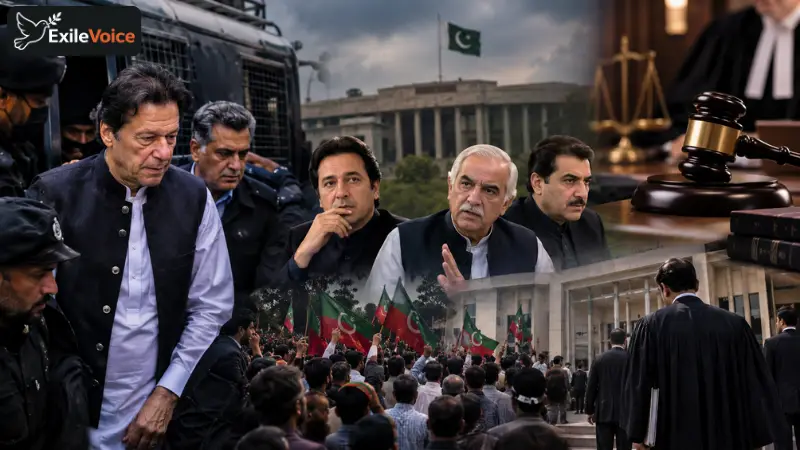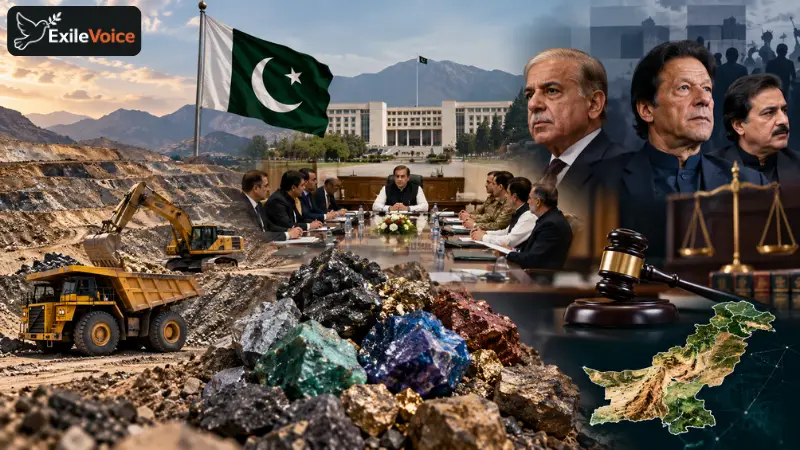
The stability of an emerging economy is inextricably linked to the integrity of its sovereign institutions. When those institutions step beyond their constitutional mandates to engage in internal political engineering, the consequences extend far beyond a simple change in government leadership. Instead, the entire state apparatus undergoes a profound structural fracture that degrades its international standing, cripples its economic performance, and leaves it vulnerable to asymmetric external pressures.
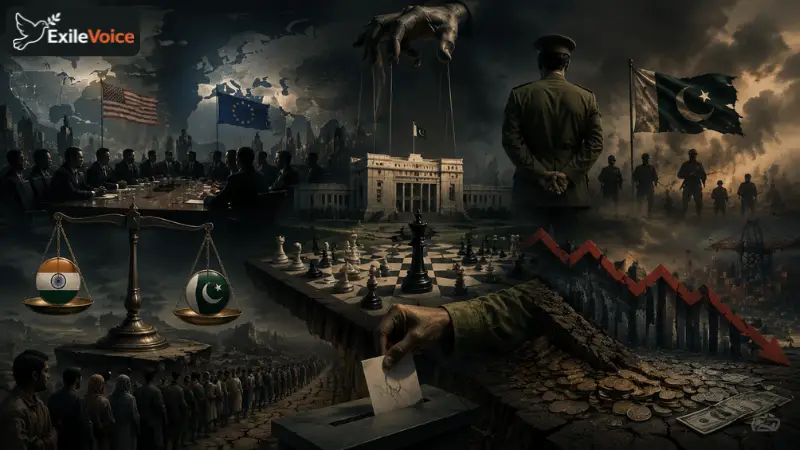
A striking example of this structural vulnerability is visible in the asymmetric standards applied to South Asian states by global superpowers. During the geopolitical realignment triggered by the Ukraine crisis, both India and Pakistan pursued virtually identical policies of strategic neutrality. Both nations abstained from United Nations votes condemning Russia and both sought to maintain open economic lines to protect their domestic markets from soaring energy prices. However, as the leaked diplomatic cable reveals, the treatment of these two states could not have been more different.
While Western diplomats publicly defended India's right to maintain economic relations with Russia, citing its historical dependencies and strategic autonomy, they treated Pakistan's identical policy as a hostile act. When questioned on this double standard by Pakistani diplomats, foreign officials openly stated that the metrics used to evaluate India did not apply to Pakistan. This diplomatic hyphenation highlights a harsh reality: states perceived as structurally weak or dependent are denied the luxury of strategic autonomy, while their sovereign policy choices are systematically treated as transactional bargaining chips.
This vulnerability is deepened by internal institutional insubordination. In a healthy constitutional democracy, the military apparatus operates strictly as an instrument of the state, executing a unified foreign policy designed by the elected civilian executive. However, the events surrounding the diplomatic cable expose a dangerous trend of parallel diplomacy. While the civilian government was actively negotiating with Moscow for subsidized oil and wheat to insulate the population from a global commodities spike, the military leadership was independently assuring foreign powers of its compliance with their strategic agendas.
This institutional disconnect culminated in public insubordination, with the army chief issuing public policy declarations that directly contradicted the official, cabinet-approved stance of the government. Such fractures send an immediate signal to the international community that the elected government does not possess real authority over its own security apparatus. Foreign powers quickly realize that they do not need to engage in traditional diplomacy with the state's executive; instead, they can apply leverage directly to the military leadership to achieve their desired policy outcomes.
The immediate fallout of this institutional overreach is almost always economic devastation. Political engineering destroys the continuity of policy, creating a volatile environment that repels foreign direct investment and fractures domestic financial markets. In the immediate aftermath of the engineered political transition of 2022, the country’s macroeconomic indicators experienced an unprecedented collapse. Prior to the intervention, the economy was experiencing its highest growth rate in 17 years, driven by strong manufacturing output and robust export performance. The artificial removal of the government completely broke this momentum.
The resulting political instability triggered a rapid depreciation of the national currency, drove inflation to historic highs, and forced the state into an aggressive, austerity-driven IMF program just to avoid sovereign default. This pattern demonstrates that institutional overreach is not a cost-free exercise. When military actors focus their energies on manipulating domestic political outcomes and silencing dissent through judicial weaponization, they inevitably neglect the structural foundations of national power. The state is left economically crippled, socially polarized, and entirely dependent on foreign financial lifelines, rendering the very concept of national sovereignty meaningless.