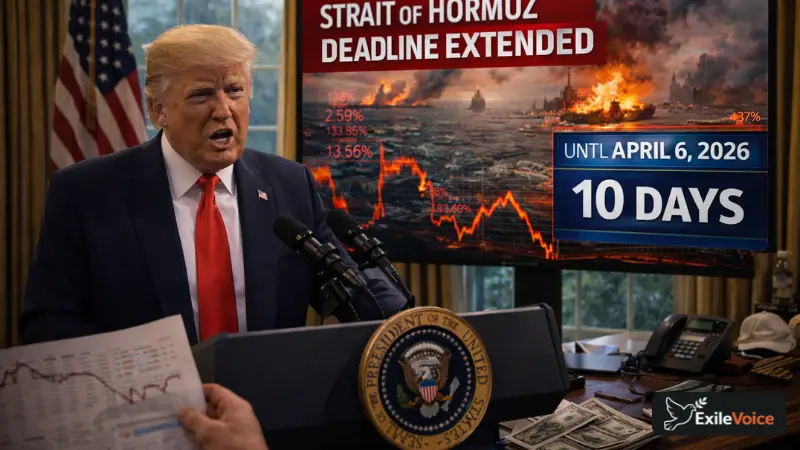
The global economy breathed a collective sigh of relief as President Donald Trump announced a ten-day extension to the deadline regarding the reopening of the Strait of Hormuz. Previously set to expire with threats of massive military strikes against Iranian energy and nuclear infrastructure, the new cutoff point is now April 6, 2026. This tactical pause comes at a critical juncture where the threat of a full-scale regional war seemed imminent, but the underlying motivations for this delay are as much about domestic survival as they are about international security.
Financial markets have been the primary driver of this decision. Wall Street recently experienced its worst trading day since the onset of the current Middle East crisis, with the S&P 500 hitting a six-month low. The specter of stagflation and a potential recession has loomed large over the American electorate, posing a direct threat to the Trump administration's standing as the November elections approach. Senior Democrats have been quick to capitalize on this volatility, arguing that a "War of Choice" in the Middle East could cost the average American family thousands of dollars in increased energy and utility costs. By granting an additional ten days, the White House is attempting to stabilize market sentiment and avoid a total economic crash before a viable diplomatic or military solution is finalized.
Furthermore, the logistical reality on the ground has complicated the "shock and awe" narrative. Reports suggest that several U.S. military bases in the region, including those in Qatar, the UAE, and Saudi Arabia, have become effectively "uninhabitable" or have been largely vacated for remote operations in Europe due to the threat of Iranian retaliatory strikes. This perceived vulnerability has forced a shift in strategy. While President Trump claims the extension was a direct request from Tehran, international analysts and media outlets like the Wall Street Journal suggest that Iran made no such formal plea. Instead, the move appears to be a calculated effort to buy time for CENTCOM to reposition assets and for mediators to extract further concessions.
The extension also serves as a test for the Iranian leadership. By pushing the deadline to the early hours of April 7 (regional time), Washington is placing the burden of proof on Tehran to demonstrate a willingness to de-escalate. However, the rhetoric remains volatile. The administration’s continued use of personalized attacks and intelligence-driven provocations against Iranian leadership suggests that while the clocks have slowed, the fundamental path toward confrontation remains unchanged. The next ten days will determine whether this reprieve is a genuine window for peace or merely the "smoke before the fire" of a larger kinetic engagement.