The return of Donald Trump to the White House has re-ignited the "Maximum Pressure" campaign against Iran, yet the tactical reality on the ground has forced a surprising pivot toward South Asian diplomacy. The administration’s reliance on informal but powerful channels, represented by figures like Steve Witkoff, suggests that traditional State Department diplomacy is being bypassed in favor of direct, military-to-military, and business-centric negotiation paths. Pakistan, specifically through its military establishment, has become the focal point of this unconventional strategy.
Washington’s desperation for a breakthrough is fueled by several failures in the previous escalatory cycle. The hope that precision strikes would trigger a popular uprising or a moderate shift in Tehran has largely evaporated. Instead, Iran has strengthened its ties with Russia and China, creating a "life line" through oil exports that bypass Western sanctions. With the global community, including traditional allies like France, the UK, and Canada, refusing to support illegal or unilateral military actions, the U.S. finds itself isolated in its confrontational stance.
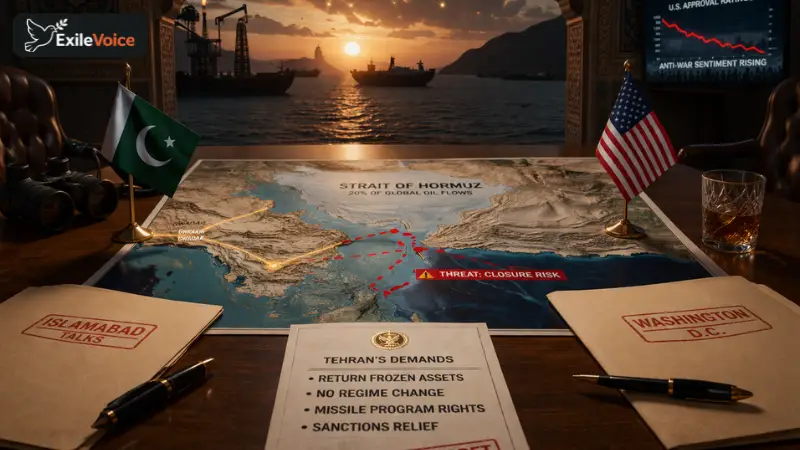
Pakistan enters this vacuum as a "functional" partner. The reported involvement of Steve Witkoff’s family in managing Pakistani remittances suggests a deepening personal and financial tie between the Trump inner circle and Islamabad’s leadership. This relationship provides the U.S. with a messenger that Tehran might actually listen to, provided the messenger is not seen as an American puppet. The stakes are particularly high for the U.S. energy sector; the threat of Iran closing the Strait of Hormuz, through which 20% of the world's oil flows, could devastate the American economy and tank Trump’s domestic approval ratings, which are already facing pressure from anti-war movements.
However, for Pakistan to succeed where others have failed, it must provide Tehran with "security guarantees" that Washington has historically been loath to offer. Tehran’s demands are clear: the return of frozen assets, a permanent end to threats of regime change, and the right to maintain its defensive missile program. Pakistan’s challenge is to convince a skeptical Iranian leadership that a deal brokered through Islamabad is more durable than the 2015 JCPOA. Without a significant shift in the U.S. stance on Iranian sovereignty, Pakistan’s efforts may end up being a series of high-profile meetings without a substantive peace treaty.