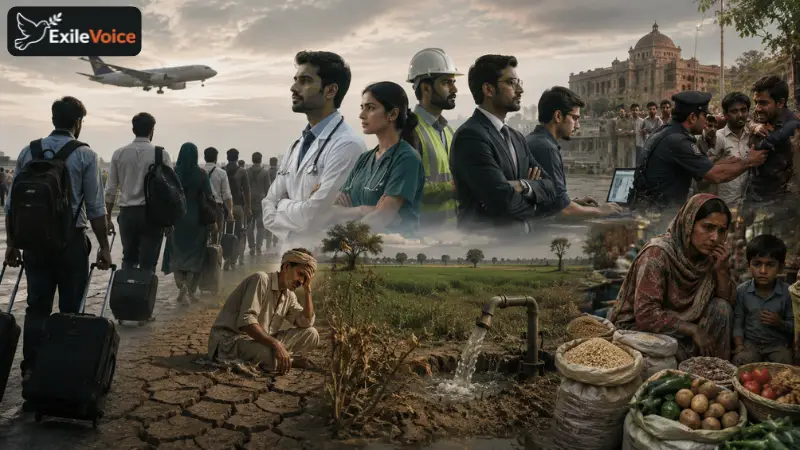
The structural health of a developing economy relies heavily on retaining and utilizing its skilled professional and technical workforce. Recent migration statistics from the first four months of the year reveal a concerning trend for Pakistan's human capital landscape: over 250,000 citizens have officially emigrated to seek employment and long-term stability overseas. A detailed look at these migration numbers shows a significant loss for the country's core development and service sectors, including 7,878 medical doctors, over 2,000 engineers, 1,650 corporate accountants, and approximately 500 specialized computer and IT professionals. Additionally, over 150,000 skilled and unskilled laborers migrated during the same period.
This large-scale migration represents a major drain on human capital that will limit domestic economic growth for years to come. The departure of doctors, engineers, and tech specialists strips the country of essential technical leadership, leading to a decline in healthcare delivery, infrastructure development, and corporate innovation. This trend is driven by a drop in domestic economic confidence as professionals face persistent high inflation, falling real wages, and an unstable operational environment that lacks clear opportunities for career growth or asset protection.
Compounding this professional flight is a structural breakdown in basic food production and distribution systems. According to recent international assessments, Pakistan has fallen significantly on the global food security index, ranking 106th out of 123 countries. This position places Pakistan among the more food-insecure nations globally, indicating systemic challenges in food access and nutrition that affect large segments of the population. This low ranking is particularly stark given Pakistan's history as an agrarian economy with vast arable lands and an extensive river-based irrigation network.
The rise of widespread food insecurity within an agrarian framework points to underlying issues in state policy and market management. Decades of low investment in agricultural modernization, flawed crop procurement strategies, and the unchecked activities of speculative syndicates have disrupted the supply chain. Rising fuel costs and electricity tariff hikes have made critical inputs, such as tubewell irrigation and fertilizers, unaffordable for small farmers. As a result, agricultural yields are declining, food prices are rising faster than average household incomes, and the state must rely on expensive imports to meet basic food needs.
The accelerating brain drain and worsening food security are closely tied to a broader decline in the rule of law and public safety. The normalization of arbitrary law enforcement actions, street-level misconduct, and the inability of judicial institutions to protect citizens have created a pervasive environment of vulnerability. When professionals observe that basic legal protections can be set aside, the incentive to invest capital or build a long-term career domestically drops significantly.
This lack of public safety is further seen in instances of street-level police misconduct, where citizens are subjected to physical abuse without clear legal recourse while bystanders watch in desensitized silence. This erosion of social trust harms the foundation needed for economic investment. The combination of structural food insecurity, professional migration, and institutional challenges points toward a long-term economic contraction. Without structural reforms to restore legal accountability and stabilize agricultural production, reversing this trend of underdevelopment will be highly challenging.