

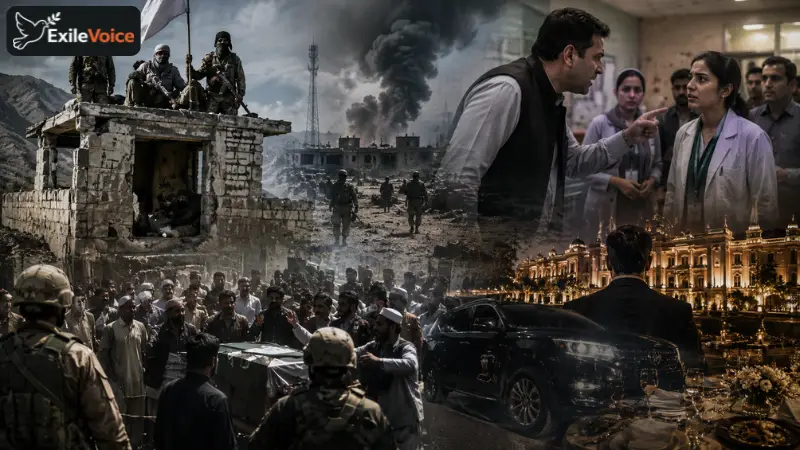
Recent reports from Pakistan's border regions and provincial administrations have highlighted a concerning trend of worsening security and administrative failures. From the occupation of security posts by militants in the Hangu district to the chaotic and insensitive handling of official duties by appointed representatives, the country is facing a multi-faceted crisis. These developments suggest a breakdown in the conventional security apparatus and a growing disconnect between government officials and the realities on the ground.
In Hangu, the recent circulation of videos showing militants inside a security post has prompted alarm. While official sources have issued statements describing the event as propaganda and claiming the post had been vacated for strategic reasons, the public remains skeptical. The incident underscores a broader pattern where control in border areas is becoming increasingly fragile. Similarly, in the Tank district, a somber situation unfolded during the funeral of martyred police officers. Local residents and family members reportedly demanded that no military personnel attend the funeral, signaling deep-seated resentment and a lack of trust in the existing security partnerships.
Beyond security, the administrative conduct of government appointees has also come under fire. Footage featuring officials berating medical staff over minor administrative issues, such as the setting of air conditioning temperatures, has drawn widespread condemnation. Critics point to this behavior as symptomatic of a broader "culture of arrogance" among the ruling elite. When juxtaposed with the extravagant use of state resources, this treatment of professionals, who are already operating under immense pressure, reveals a significant management failure. These combined crises, spanning from the border regions to provincial hospitals, reflect a nation grappling with institutional erosion and a leadership crisis that demands immediate attention.

