As the conflict in the Middle East crosses the one-month mark, a counter-intuitive reality is emerging: Iran’s economy is not just surviving; it is expanding. Despite the presence of the U.S. Navy and the threat of catastrophic escalation, reports suggest that Tehran’s daily oil exports have actually increased compared to the previous month. The Islamic Revolutionary Guard Corps (IRGC) has successfully decentralized its energy trade, moving away from official entities like the National Iranian Oil Company to a sophisticated web of shadow shipping and payment networks.
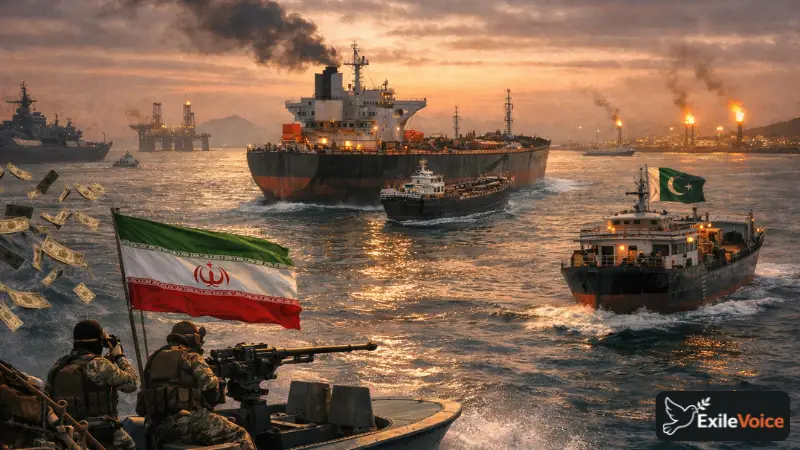
Central to this economic resilience is the strategic use of global financial havens and the support of Chinese banks. By utilizing shell companies and un-official "oligarch" networks, Iran has effectively bypassed traditional sanctions. Furthermore, the Strait of Hormuz has become a lucrative revenue stream for Tehran. Reports indicate that Iran has imposed a "toll" system on passing vessels. Specifically, ships flying the Pakistani flag, part of a recent facilitation agreement, are reportedly paying upwards of $2 million per vessel for safe passage. Given that approximately 140 to 150 ships transit the strait daily, the potential daily revenue for Iran reaches staggering figures, with some estimates suggesting a "bhatta" (protection money) income of billions of dollars per month.
This economic windfall has turned the traditional logic of war on its head. While Washington and its allies aim for the destruction of Iranian missile sites and the containment of its nuclear ambitions, Tehran is leveraging the chaos to double its earnings. Financial analysts from the Economist and the Financial Times note that Iran may emerge from this conflict not only stronger but more dangerous, having battle-tested its decentralized financial systems. For Iran, "victory" does not require a traditional military defeat of the United States; it merely requires survival and the continued flow of capital through its shadow networks. As long as the Strait of Hormuz remains under their influence and Chinese demand persists, the economic "castle" of Tehran appears fortified against the surrounding "circus" of regional war.