The visual narrative emerging from Pakistan’s political and media circles reveals a troubling trend of misplaced priorities and the systematic silencing of dissent. As the country faces one of its most challenging periods, the behavior of both the opposition and the state’s media apparatus suggests a lack of seriousness in addressing the fundamental rights of the people.
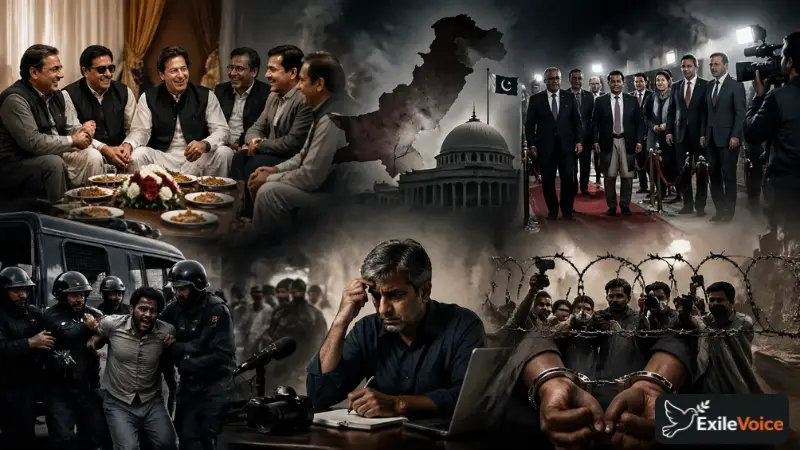
The recent "celebratory" optics from opposition parties, particularly figures within the PTI and its allies, have drawn significant criticism. Images of political leaders smiling and appearing as if at an "Eid Milan party" contrast sharply with the reported suffering of their primary leaders and the general public. While the opposition claims to be acting on the orders of incarcerated leaders like Imran Khan to maintain state stability, the lack of a clear, forceful position on human rights violations within their own ranks suggests a "party of brakes." When an opposition party stops protesting and starts appearing content while its members face incarceration and systemic pressure, it risks losing its credibility as a genuine alternative to the current establishment.
Simultaneously, a new scandal involving international journalists and local media figures has highlighted the treacherous terrain of information warfare in Islamabad. The invitation of foreign journalists by Matiullah Jan to a seminar at the National Press Club became a point of contention when one journalist claimed the group was "used" to create a political statement against the government. While Jan defended the event as a standard journalistic exchange of perspectives, the state’s reaction and the subsequent social media onslaught against him illustrate the narrow margins for independent reporting. The reality is that the state is increasingly sensitive to how its domestic crackdown on journalism, typified by the recent arrest and subsequent bail of senior journalists like Fakhar Rahman, is perceived globally.
The state’s strategy appears to be one of "curated hospitality." By hosting international delegations in convention centers and providing "red carpet" treatment to Western observers, the administration hopes to overshadow the daily realities of local journalists who are often abducted or harassed for a single tweet. However, this strategy is failing to convince anyone beyond those directly on the government’s payroll. Professional diplomacy and media management should be based on transparency, not on trying to "trick" international visitors into ignoring human rights abuses.
Ultimately, the crisis of optics is a symptom of a deeper crisis of legitimacy. Whether it is the opposition appearing disconnected from the struggle or the state attempting to paper over its authoritarian tendencies with "food and shields," the result is the same: a hollowing out of the democratic process. A nation’s strength is reflected in the freedom of its press and the integrity of its political discourse. In Pakistan today, both are under siege, leaving the public to navigate a landscape of misinformation and political theater.