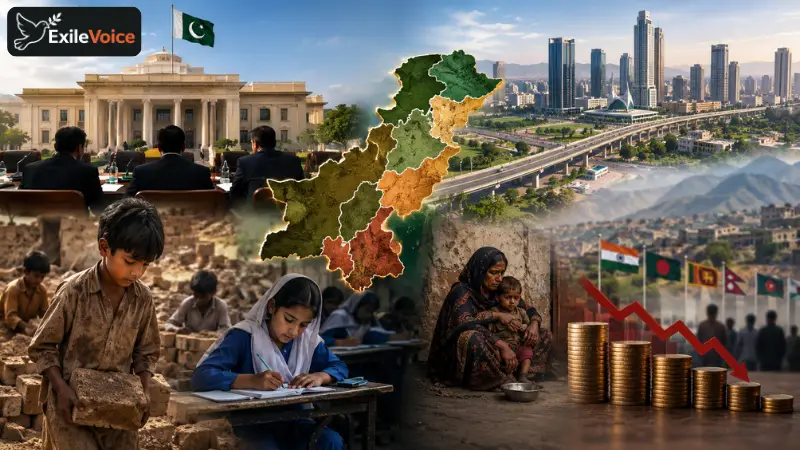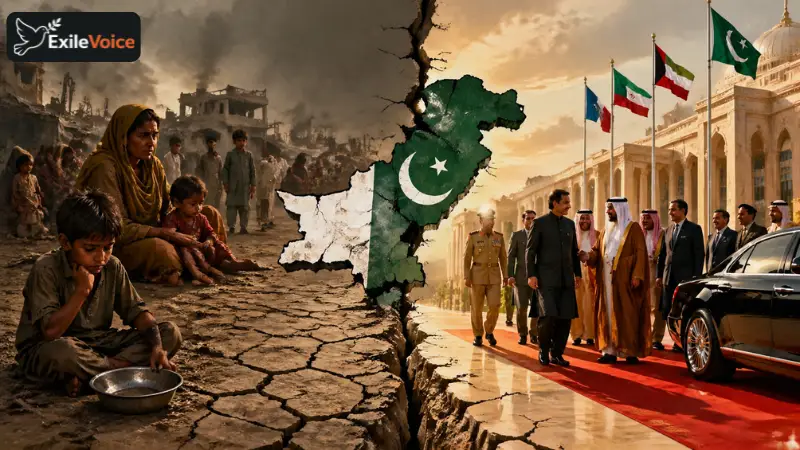
The current geopolitical landscape presents a jarring dichotomy for Pakistan. While the nation’s military and political leadership seek to project the image of a "strategic middle power" capable of mediating complex Middle Eastern conflicts, the domestic reality is one of profound fragility and human suffering. Recent international reports, including findings from the United Nations, indicate that Pakistan has officially entered the list of the top ten most food-insecure nations globally. This internal collapse stands in stark contrast to the high-stakes diplomacy being conducted in the halls of power in Islamabad and Rawalpindi.
The "Strong Abroad, Starving at Home" phenomenon is not merely a seasonal fluctuation or a result of recent climate disasters; it is an indictment of decades of systemic governance failures. According to the Global Report on Food Crises, approximately 11 million Pakistanis are currently facing acute food insecurity. These figures represent more than just statistics; they signify a nation that, despite being an agrarian economy with nuclear capabilities, cannot fulfill the most basic need of its populace: nutrition. The irony of an agricultural powerhouse struggling to feed its children highlights a deep-seated economic fragility that has been ignored in favor of maintaining an elite-led security state.
On the international front, Pakistan’s attempt to position itself as a mediator between Saudi Arabia, Iran, and the United Arab Emirates (UAE) has met with cold "financial realism." A significant news break reveals that the UAE recently issued a stern demand for the repayment of $3.5 billion in rolled-over loans. This move is interpreted by analysts as a diplomatic signal to Islamabad: do not mistake visibility for strength. The UAE’s pressure suggests a growing alignment with India and a dissatisfaction with Pakistan’s perceived tilt toward Saudi Arabia in intra-Arab disputes.
The dependency on "brotherly" nations has long been the cornerstone of Pakistani foreign policy, yet recent events prove that in the realm of geopolitics, there are no brothers, only interests. As the elite classes continue to invest in real estate in Dubai and London, the average citizen is left to bear the brunt of inflation and food shortages. The disparity between the lifestyle of the establishment and the "acute crisis" conditions of millions of citizens creates a volatile domestic environment.
Furthermore, the role of external powers like Russia and Iran is shifting. Recent meetings between Russian President Vladimir Putin and Iranian representatives indicate a new axis of influence that bypasses Western-centric mediation. While Pakistan’s leadership tries to secure international legitimacy through grand conventions and red-carpet events, the global community is increasingly aware of the "hollow" nature of this power. A nation that treats its own citizens with coercion and fails to provide social protection cannot sustain a respected position on the world stage for long. The path forward requires a pivot from "defense realism" to "human realism," where the security of the citizen is prioritized over the optics of the state.