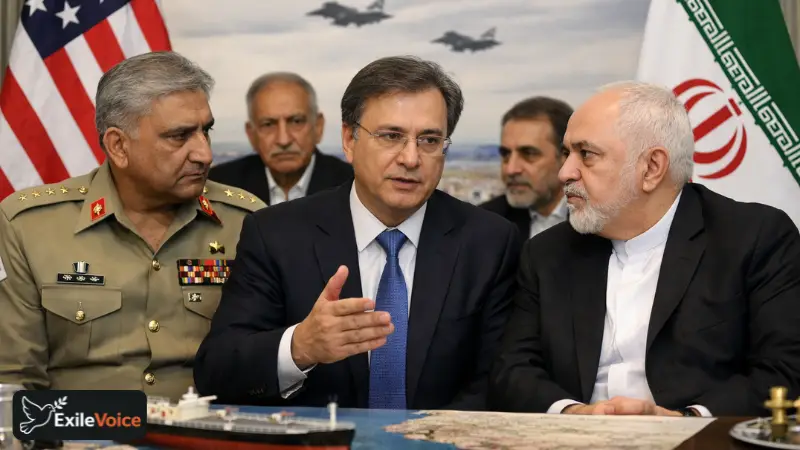
The geopolitical landscape of the Middle East is currently facing one of its most volatile periods in recent history, as the "War on Iran" moves from a theoretical threat to a devastating reality. At the center of this storm is an unexpected mediator: Pakistan. While the Pakistani military and civilian leadership often face internal criticism regarding their legitimacy and economic management, they have found a newfound relevance on the global stage. By acting as a diplomatic bridge between the Trump administration and the Iranian leadership, Pakistan is attempting to provide a crucial "off-ramp" to prevent a total regional conflagration.
The conflict has reached a critical juncture where the traditional tools of war are yielding diminishing returns for the United States. Despite thousands of airstrikes reported by mainstream outlets, the Iranian military remains a formidable force with significant leverage. The strategic closure of the Strait of Hormuz has placed the global economy in a state of high anxiety, as any further escalation could plunge the world into a deep depression. In this context, Pakistan’s intervention is not merely about regional prestige; it is a vital necessity for a U.S. administration that may have underestimated the cost of a direct kinetic engagement with Tehran.
Erik Sperling, Executive Director of Just Foreign Policy, suggests that while the Pakistani establishment may be seeking local political points by playing the role of a regional peacemaker, their historical and cultural awareness of the region provides a level of nuance that Washington often lacks.
The current negotiations are focused on finding "face-saving" measures for President Trump, allowing him to claim a victory to his base while granting Iran the security guarantees it requires to halt its defensive operations. These guarantees, however, are complex. For a lasting peace, it appears that Russia and China may need to be involved as guarantors, a move that would signal a shift in the global order and a potential end to unilateral U.S. hegemony in the region.
The stakes for the U.S. presidency are equally high. The war contradicts the "America First" and non-interventionist rhetoric that defined the Trump campaign. If the conflict continues to degrade global oil supplies and impact the domestic economy, it could lead to a political disaster for the Republican party in upcoming elections. Therefore, the Pakistani-led negotiation represents a rare moment where the interests of a "troubled" administration and a regional power align to prevent a catastrophe. The next few days remain critical as the world watches whether this 5-day window for negotiation will yield a sustainable ceasefire or if the "war machine" will continue its march.