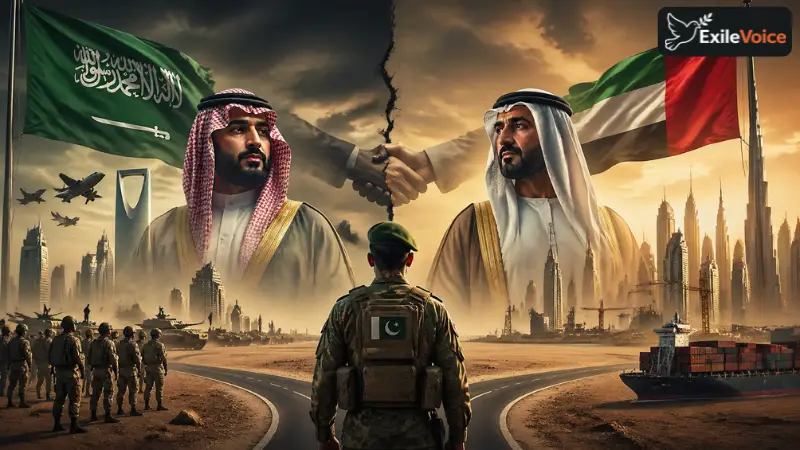
Pakistan finds itself at a critical crossroads as the historical unity of its Middle Eastern benefactors dissolves. For decades, Pakistan relied on a "dual-pillar" strategy, maintaining close military and economic ties with both Saudi Arabia and the United Arab Emirates. However, as these two powers diverge, Islamabad is being forced into uncomfortable compromises that threaten its long-term stability.
The UAE’s sudden decision to withdraw $3.5 billion in financial support and cancel the conversion of debt into shares of the military-linked Fauji Foundation marks a low point in Pakistan-UAE relations. Historically, the bond was so tight that the first five chiefs of the UAE Air Force were Pakistani citizens. Today, that influence has been largely supplanted by India, which now provides a much larger share of the UAE’s professional workforce and retail management.
In response to the UAE’s withdrawal, Pakistan has leaned heavily into the Saudi camp. Roughly half of Pakistan’s central bank reserves are now comprised of Saudi deposits. This over-reliance has come at a steep strategic price: the deployment of 13,000 Pakistani combat troops and Air Force squadrons to eastern Saudi Arabia. While presented as a "mutual defense pact," the deployment serves as a signal to Iran, placing Pakistan in the middle of a potential regional conflagration.
The dilemma for Pakistan’s military establishment and Foreign Office is twofold. First, the reliance on Saudi Arabia is precarious, as Riyadh itself faces tightening liquidity and a widening deficit due to regional wars and domestic transformation costs. Second, by aligning so closely with the Saudi military apparatus, Pakistan risks alienating Iran and losing its remaining "shuttle diplomacy" leverage. As the UAE moves toward a future defined by Israel and India, and Saudi Arabia focuses on its own existential security, Pakistan must urgently redefine its role in the Middle East or risk becoming a collateral casualty of the region's changing power dynamics.