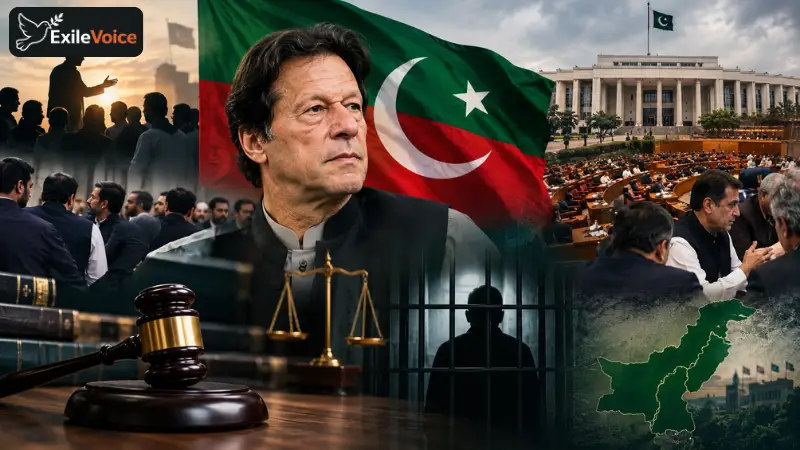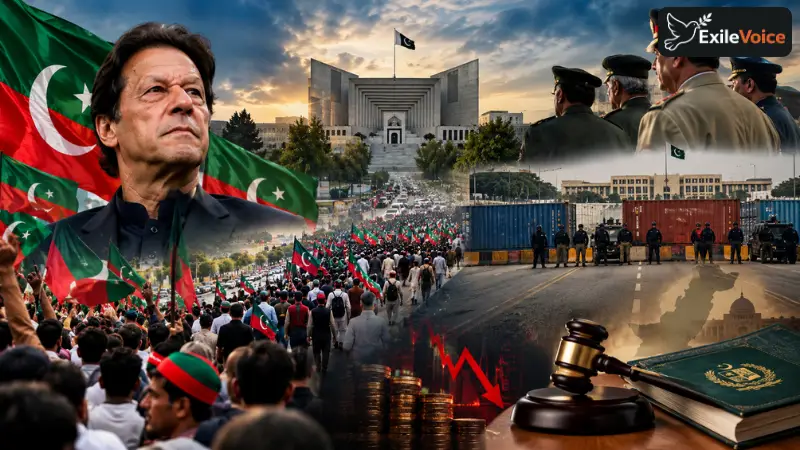
Pakistan's political landscape stands at a precarious juncture as the confrontation between the opposition Tehreek-e-Insaf (PTI) party and the ruling coalition intensifies. The central point of friction revolves around PTI's planned protest push, commonly referred to as the Long March, scheduled against the backdrop of heightened political friction and economic fragility. The federal government, along with key establishment stakeholders, has weighed intense countermeasures, bringing debate over constitutional emergency declarations, Governor's rule, and national security clampdowns back to the forefront of national discourse.
The core motivation driving the protest push stems from ongoing demands regarding judicial independence, human rights protections, and the immediate release or improved detention conditions of incarcerated political leadership, notably former Prime Minister Imran Khan. The opposition leadership has organized protest mobilization strategies across various provinces, with Khyber Pakhtunkhwa serving as a primary operational hub under provincial leadership. However, federal authorities view the proposed march as a direct threat to public order and civil administration in the federal capital.
In response to the opposition's mobilization, strategic deliberations within government and security apparatuses have centered on several constitutional mechanisms. Article 232 and Article 234 of the Constitution of Pakistan permit the declaration of a state of emergency or the imposition of Governor's rule in circumstances where internal disturbances exceed local law enforcement capabilities or where provincial governance cannot be carried out in accordance with constitutional provisions. Political analysts observe that invoking these emergency clauses presents significant legal and operational risks, potentially exacerbating public grievances and international diplomatic scrutiny.
Parallel to constitutional maneuvers, security planners have evaluated logistical countermeasures designed to restrict public assembly and political movement. These measures include strict internet and cellular service throttlings, federal highway blockades using heavy shipping containers, and nationwide law enforcement deployments. Concurrently, political backchannels continue to operate fitfully. Key political powerbrokers, including coalition partners like the Pakistan Peoples Party (PPP) and Pakistan Muslim League-Nawaz (PML-N), have engaged in delicate consensus-building to navigate the impending confrontation without resorting to formal emergency rule.
The economic implications of this political impasse remain severe. Sustained instability severely dampens investor confidence, disrupts internal supply chains, and threatens vital negotiations with international financial institutions. As the deadline for civil mobilization nears, both the ruling administration and opposition networks remain locked in a game of tactical brinkmanship, where the line between constitutional governance and extraordinary executive measures remains increasingly thin.