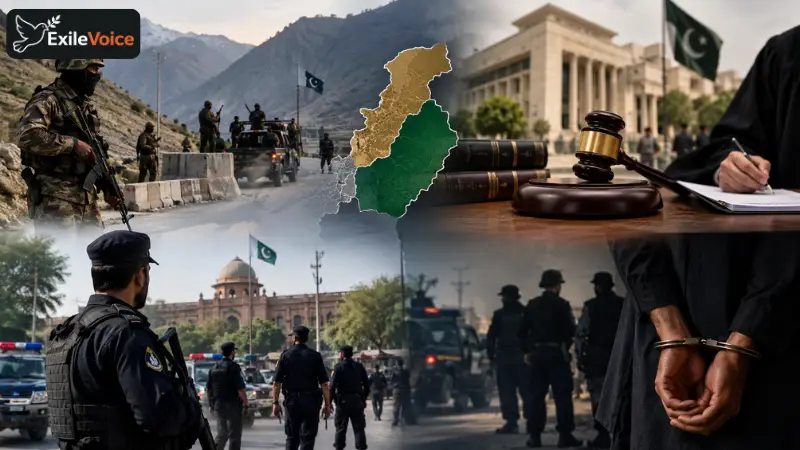
Beyond public rallies and street mobilization, a critical structural struggle in Pakistan unfolds within judicial and executive institutions. Recent legislative amendments and administrative appointments have redefined the relationship between the judiciary, executive ministries, and intelligence agencies, raising key questions regarding constitutional autonomy, fundamental civil rights, and administrative oversight.
At the heart of the institutional dispute is the administration of judicial appointments and bench assignments in top constitutional courts. Recent legal amendments governing court operations and supreme judicial bodies have altered traditional seniority-based appointment pathways. Critics argue that these procedural modifications enable executive overreach, allowing the state to influence bench compositions in politically sensitive matters. Conversely, proponents maintain that structural reforms are required to streamline judicial backlogs and ensure accountability within the legal framework.
Simultaneously, law enforcement agencies face growing scrutiny over administrative practices involving political detentions, venue restrictions, and freedom of assembly. State apparatuses frequently resort to preemptive detentions, invoking public order ordinances to prevent assembly before mass protests materialize. Human rights advocates and legal scholars point out that such actions weaken constitutional guarantees regarding freedom of expression and political participation.
Another critical dimension involves the strategic posture of regional security leadership and civil administration. As provincial governments clash with federal authorities over jurisdictional boundaries, local administrators and law enforcement leadership find themselves caught between regional political directives and federal mandates. This dynamic is especially acute in regions where local governments belong to opposition factions while federal control remains with the ruling coalition.
Navigating this institutional impasse requires structural reform that restores clear boundaries between executive authority, judicial independence, and legislative integrity. Without institutional stability and predictable legal enforcement, broader governance objectives, ranging from economic recovery to civil security, face continuous disruption.