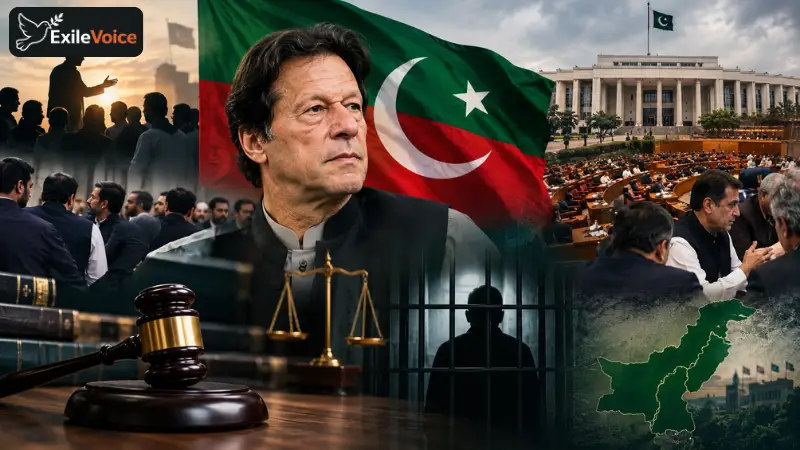
Pakistan stands at a critical political crossroads as high-stakes backchannel negotiations, rumors of executive power shifts, and escalating tensions between the federal government and opposition forces converge. Recent developments inside Islamabad’s political corridors indicate that a series of secret talks involving key stakeholders, including political emissaries and military leadership, may have reached a pivotal juncture. Observers note that while visual optics from top leadership meetings suggest optimism and resolution, underlying structural rivalries continue to test the stability of the ruling coalition.
Central to the current political friction is the posture of the opposition, led by Pakistan Tehreek-e-Insaf (PTI). Pressure tactics centered around protest calls and the threat of a renewed long march on Islamabad have forced the ruling alliance into strategic maneuvers. To counter opposition momentum, discussions regarding the potential imposition of Governor’s Rule in Khyber Pakhtunkhwa under Article 234 of the Constitution have gained significant traction. Proponents of federal intervention argue that administrative breakdown in opposition-held territories warrants direct federal oversight, while critics warn that suppressing provincial autonomy risks triggering widespread political instability.
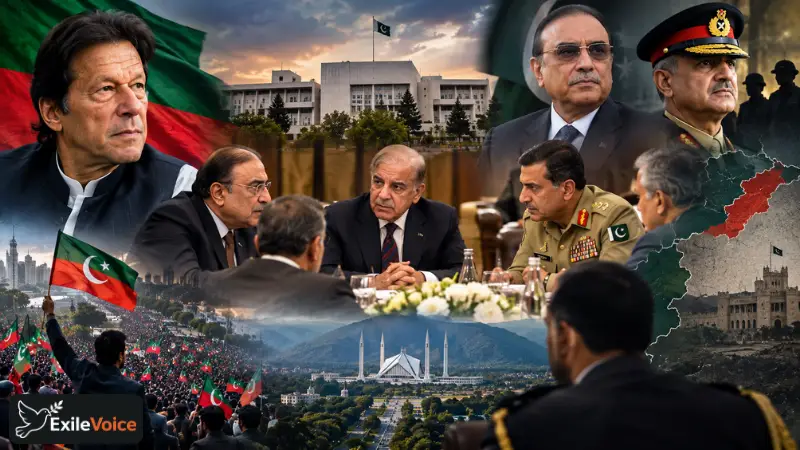
Simultaneously, the active involvement of President Asif Ali Zardari and senior military officials in high-level consultations highlights the delicate balance between civilian governance and the establishment. The convergence of Prime Minister Shehbaz Sharif, President Zardari, and top intelligence officials in emergency sessions underscores the depth of the challenge facing the coalition. Political analysts suggest that while temporary compromises may defuse immediate street protests, long-term political equilibrium remains elusive without genuine institutional consensus and legal reform.
As rumors circulate regarding potential deals between opposition elements and state power centers, the public and political observers remain cautious. The outcome of these high-stakes negotiations will determine whether Pakistan can navigate its current political volatility through institutional dialogue or if civil-military frictions will trigger a broader executive realignment.