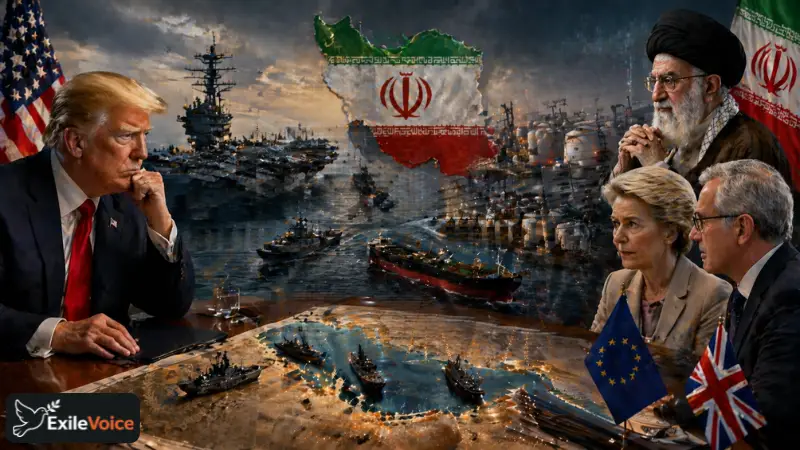
The relationship between the United States and Iran has entered a phase described as a "diplomatic tango", a high-stakes dance of calculated moves and countermoves. Recent reports from the Wall Street Journal indicate that Donald Trump has directed his advisors to prepare for a long-term naval blockade of Iran. The objective is clear: to exert maximum economic pressure and force Tehran into a "suitable deal" that addresses both nuclear enrichment and regional influence.
The economic toll of such a blockade is potentially catastrophic for Iran’s oil industry. Unlike Saudi Arabia or the UAE, which possess vast storage and modern export infrastructure, Iran is currently struggling with a lack of storage capacity. Reports suggest that active oil wells are overflowing because they cannot be easily shut down without causing long-term technical damage. With tankers already at full capacity, the naval blockade threatens to destroy the very revenue streams Iran relies on for survival.
The core of Trump’s demand is a 20-year moratorium on nuclear enrichment, a significant jump from previous 5-to-10-year offers. To bolster this position, the Trump administration is actively shaping public opinion, even leveraging the visit of King Charles III to emphasize the "umbilical relationship" between the US and UK on global security. By getting the British monarch to echo the sentiment that Iran must never possess a nuclear weapon, Trump is preparing a political "sale" to the American public for a future deal.
Meanwhile, the European Union finds itself in a state of perceived hypocrisy. While EU Commission President Ursula von der Leyen calls for the Strait of Hormuz to remain open under international law, European leaders have remained largely silent on the unilateral US withdrawal from the Joint Comprehensive Plan of Action (JCPOA) in 2018. The EU's inability to offer Iran concrete economic alternatives to circumvent US sanctions has rendered their diplomatic influence negligible. As Iran continues to demand the removal of primary and secondary sanctions, the world watches to see if this diplomatic dance will lead to a breakthrough or a devastating regional conflict.