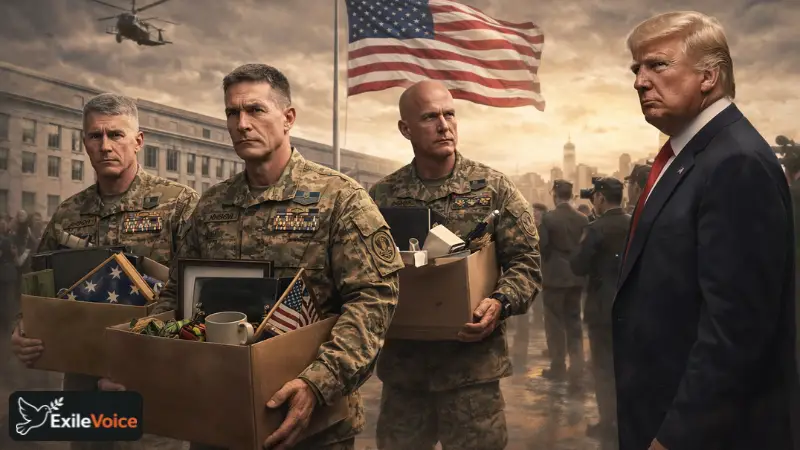
The United States military hierarchy has experienced a profound and sudden transformation following the dismissal of several high-ranking generals by Secretary of Defense Pete Hegseth. This structural upheaval began with the removal of General Randy George, the Chief of Staff of the Army, and was quickly followed by the ousting of two other senior figures, General William Green and General David Hodne. Such a rapid replacement of top-tier military leadership is rare in American history and suggests a strategic shift in the administration's approach to defense policy and internal military culture.
General Randy George, who was not scheduled for retirement until 2027, played a critical role in advising the President on wartime operations and spearheading the modernization of the U.S. Army. His sudden departure reflects a significant friction between traditional military leadership and the current administration’s vision for the future of the armed forces. Similarly, the dismissal of General David Hodne, responsible for future warfare and training, and General William Green, who oversaw the moral and ethical conduct of the troops, underscores an attempt to redefine the "moral code" and operational priorities within the Pentagon.
In the American democratic framework, such dismissals, while controversial, do not typically lead to the domestic instability or "my fellow countrymen" style takeovers seen in other regions. Despite the intense public debate and widespread protests against ongoing military involvement, the institutional integrity of the U.S. government has remained intact. This stability is largely attributed to a culture where civilian authority over the military is a strictly upheld norm. Unlike systems where individuals can turn entire institutions into personal tools, the U.S. system relies on established SOPs, institutional values, and a clear hierarchy designed to withstand the influence of a single leader.
The broader implications of these firings are currently being debated by defense analysts. Some view the move as a necessary housecleaning to align the military with the elected leadership's policies, particularly regarding modernization and moral standards. Others worry that the rapid turnover, with over 12 generals replaced in recent months, could undermine institutional memory and expertise at a time when global tensions are high. As the administration continues to hand-pick its leadership team, the focus shifts to how these new commanders will manage the complex challenges of 21st-century warfare and the internal culture of the world's most powerful military.