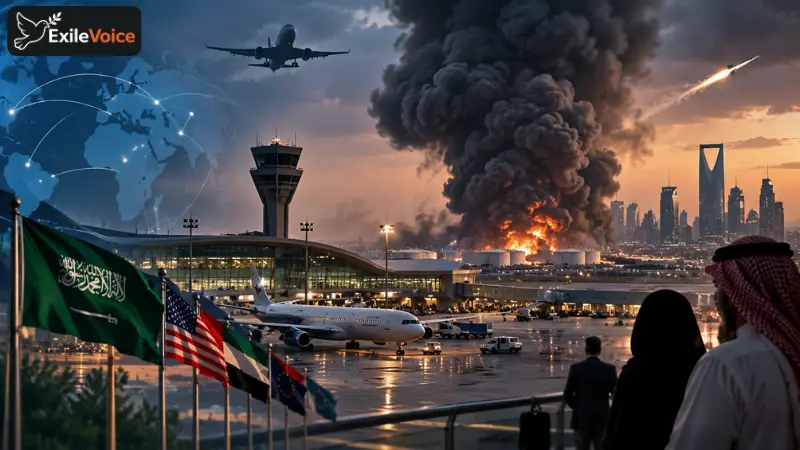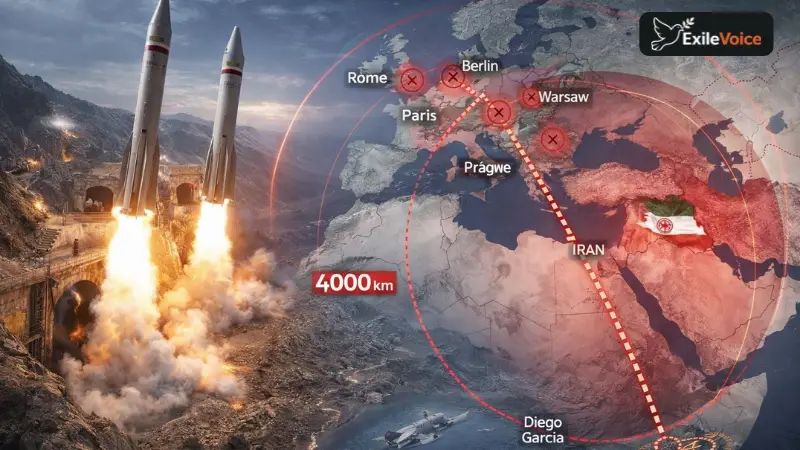
Recent developments in the Middle East have signaled a tectonic shift in global security dynamics. For years, international intelligence assessments maintained that Iran’s ballistic missile arsenal was capped at a range of approximately 2,000 kilometers. This range effectively placed Israel and neighboring Gulf states within reach but left European capitals largely outside the immediate threat perimeter. However, recent tests involving medium-range ballistic missiles with a reported capacity of 4,000 kilometers have fundamentally altered this calculus.
The launch of these missiles toward the Diego Garcia region in the Indian Ocean, a strategic joint base for the United Kingdom and the United States, serves as a potent signal of Iran’s evolving military reach. While these tests did not result in direct hits, the technical demonstration of a 4,000-kilometer range suggests that cities such as Berlin, Rome, Prague, and Warsaw are now theoretically within the engagement zone. If warhead weights are optimized or launch positions shifted closer to borders, the perimeter could potentially extend toward Paris and London.
The psychological and economic impact of this range extension cannot be overstated. Even without a direct kinetic strike, the mere capability to reach European financial centers introduces a level of instability that affects global markets, aviation routes, and insurance premiums. The "missile city" infrastructure, expansive underground facilities carved into rugged mountain ranges, provides Iran with a high degree of survivability against traditional aerial bombardment. Reports indicate these tunnels are miles long, housing manufacturing, storage, and launch capabilities that are difficult to neutralize permanently.
Furthermore, the introduction of cluster warhead technology adds a layer of complexity to missile defense systems. European nations, previously operating under the assumption of geographical safety, are now forced to reassess their integrated air and missile defense (IAMD) strategies. The geopolitical messaging is clear: any escalation in the Middle East can no longer be contained within the region, as the technical barriers that once protected the West are rapidly dissolving.