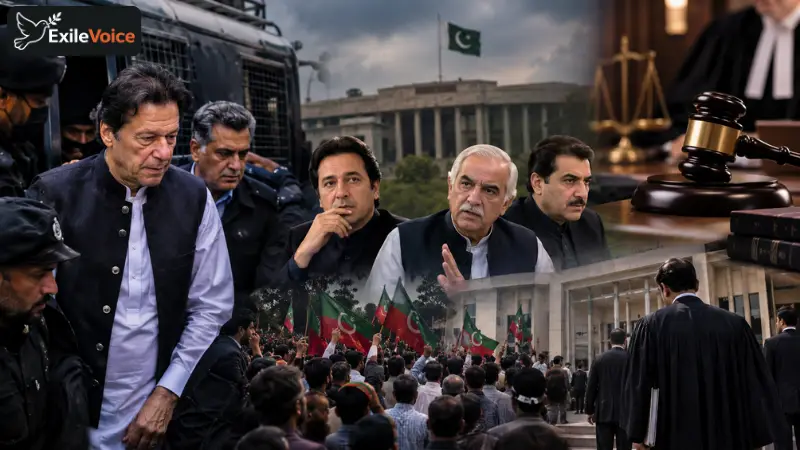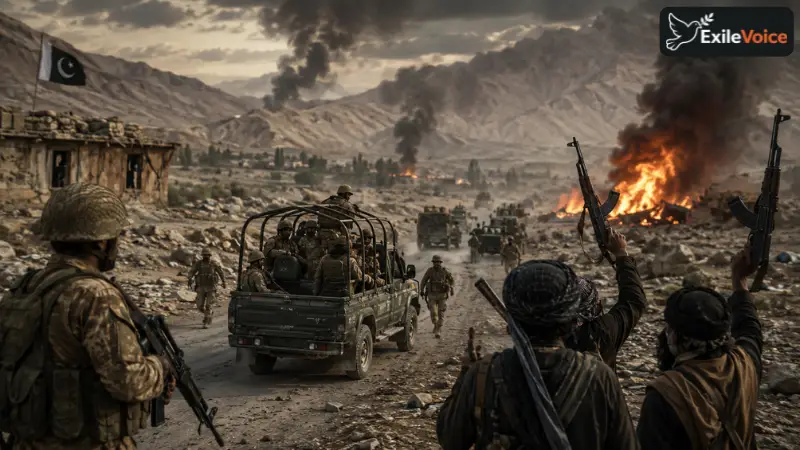
Pakistan is currently facing a profound internal security crisis in Balochistan, the country's largest province by land area. Since July 5, 2026, the region has witnessed a surge in coordinated attacks by various insurgent groups, including the TTP and BLA, targeting military convoys, police stations, and government infrastructure in areas such as Ziarat, Quetta, and Chagai.
These events present a severe challenge to Pakistan’s powerful military establishment. Despite rigorous crackdowns, mass arrests of activists, and a heavy security presence, the state appears unable to contain the insurgency. The pattern of attacks, frequent, widely dispersed, and targeting law enforcement apparatus, suggests a sophisticated, low-cost guerrilla warfare strategy that has plunged the province into a state of chaos.
Observers note a stark contrast between Pakistan’s internal trajectory today and its state in 2021/2022. During that period, the nation was focused on economic recovery, health initiatives, and development. Today, however, Pakistan is grappling with active insurgencies in multiple regions. There is a growing sentiment that the current environment of civil unrest and instability is paradoxically receiving international support, as this weakened version of the state aligns with certain foreign strategic interests, whereas a peaceful, developing, and independent-minded Pakistan was previously viewed as unacceptable by Western powers. The military’s reliance on brute force in its counter-insurgency strategy is arguably fueling further resentment among the local population, providing a steady stream of new recruits for the insurgency.